The United States has reaffirmed its commitment to enforcing a peace agreement in the Democratic Republic of Congo (DRC). This comes as the M23 rebel movement announced it would withdraw its fighters from a key city, highlighting the delicate and unstable situation of a conflict that has serious humanitarian impacts. This development occurs amid ongoing international concerns about Rwanda’s alleged support for the rebels and views on how recent U.S.-brokered diplomacy connects with long-term American economic and strategic interests in the region’s valuable minerals.
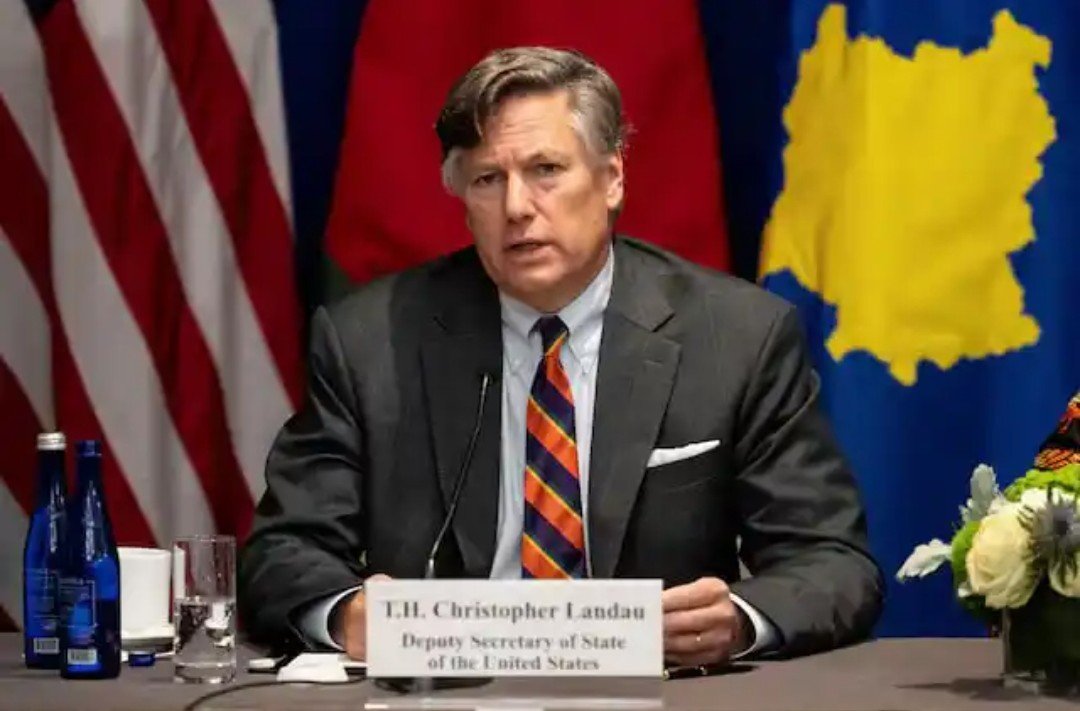
Deputy Secretary of State Christopher Landau delivered this message during a meeting in Washington with DRC Foreign Minister Thérèse Kayikwamba Wagner, as stated by Principal Deputy Spokesperson Tommy Pigott. The State Department noted that Landau emphasized the need for full compliance with the Washington Accords and indicated that the U.S. is ready to take action to ensure adherence.
The talks coincided with the DRC’s preparation to take on a non-permanent seat on the United Nations Security Council. Landau hinted that this could facilitate closer cooperation. The officials also discussed the worsening security situation in eastern DRC following renewed actions by the M23 rebel group, which the U.S., the European Union and United Nations experts claim receives substantial backing from Rwandan military forces.
During these diplomatic exchanges, the M23 group announced it would pull its fighters out of Uvira, a vital trade hub on Lake Tanganyika in South Kivu province. The group described this decision as a “trust-building measure” intended to support ongoing peace efforts in Doha, Qatar and claimed it was made at the request of U.S. mediators.
“Despite ongoing provocations and abuses by the FARDC and its allies, the Alliance Fleuve Congo has chosen to undertake a unilateral trust-building measure to give the Doha peace process the best chance to succeed,” the group noted in a statement. However, M23 warned that past withdrawals had been misused by the Congolese army, known as the FARDC, and other armed groups to regain control of territory. They urged international guarantors to create systems for managing Uvira, including demilitarization and protocols for civilian protection.
This announcement followed several days of intense fighting in South Kivu, which led to a serious humanitarian crisis. Reports indicated that M23 fighters entered Uvira last week, prompting heavy artillery fire and gun battles that forced thousands of civilians to flee. Many sought refuge in neighboring Burundi, which has reported an influx of tens of thousands of refugees from eastern DRC in recent weeks.
Congolese authorities provided conflicting reports about the situation. While M23 claimed control of Uvira, local authorities maintained that government forces still held the city center. The United Nations humanitarian office reported that renewed fighting has displaced around 200,000 individuals in recent weeks alone, on top of the millions already displaced within the DRC due to years of instability. Aid groups in the area highlight overcrowded transit camps, food and clean water shortages, and an increasing risk of disease outbreaks, all emphasizing the severe human cost of geopolitical maneuvers.
This recent escalation occurred just after a prominent peace agreement was reached in Washington between DRC President Felix Tshisekedi and Rwandan President Paul Kagame. The deal committed both nations to a permanent ceasefire, disarming armed groups, and fostering deeper regional economic cooperation. Notably, M23 is not a party to the Washington Accords and is seeking separate negotiations with the Congolese government under Qatari mediation.
Regional diplomacy remains complex. Rwanda’s Foreign Affairs Minister Olivier Nduhungirehe has repeatedly accused Western countries of selectively condemning violence while ignoring alleged ceasefire breaches and human rights violations committed by the FARDC and its allied militias, which include groups accused of committing violence against Rwandan-speaking communities. Kigali denies all claims of backing M23, describing its involvement as a legitimate security issue.
The Washington Accords have garnered special attention from analysts, who point out that the agreement includes frameworks for deeper economic ties and joint resource exploitation. The DRC is home to some of the largest reserves of cobalt, copper and other minerals essential for the global shift to renewable energy and electric vehicles. Observers believe that by taking on the role of primary mediator and guarantor of stability, the United States secures a strategic benefit, potentially ensuring American companies favorable access to these supply chains while promoting conflict resolution and accountability.
This context adds complexity to the U.S. promise to enforce compliance with the Accords. While it is publicly presented as a neutral move for peace, the policy intertwines diplomatic pressure with substantial economic interests. The ongoing conflict, fueled in part by competition over resource-rich areas, benefits various armed groups and critics argue it aids foreign interests seeking control in a destabilized region where extraction agreements can proceed with limited oversight.
M23’s unilateral withdrawal from Uvira presents a fragile opportunity. Whether this leads to a real reduction in conflict or simply a shifting of forces remains unclear. The group’s statement explicitly tied its action to the Doha process, rather than the Washington agreement, showing the fractured nature of peace efforts. For the displaced civilians, the immediate priority is safety and the chance to return home, but such conditions have seldom lasted in the past.
As the United States prepares to take a more active role in enforcing the Washington deal and as the DRC steps into a higher profile at the UN Security Council, the root causes of the conflict remain unresolved. These include the legitimate complaints of marginalized communities, the illegal exploitation of resources that support armed groups, the alleged cross-border assistance from Rwanda, and the competition for strategic minerals that draws in global players. The humanitarian crisis continues to grow, suggesting that without a complete approach that prioritizes civilian safety and just resource management over strategic and economic interests, cycles of violence and displacement are likely to continue.