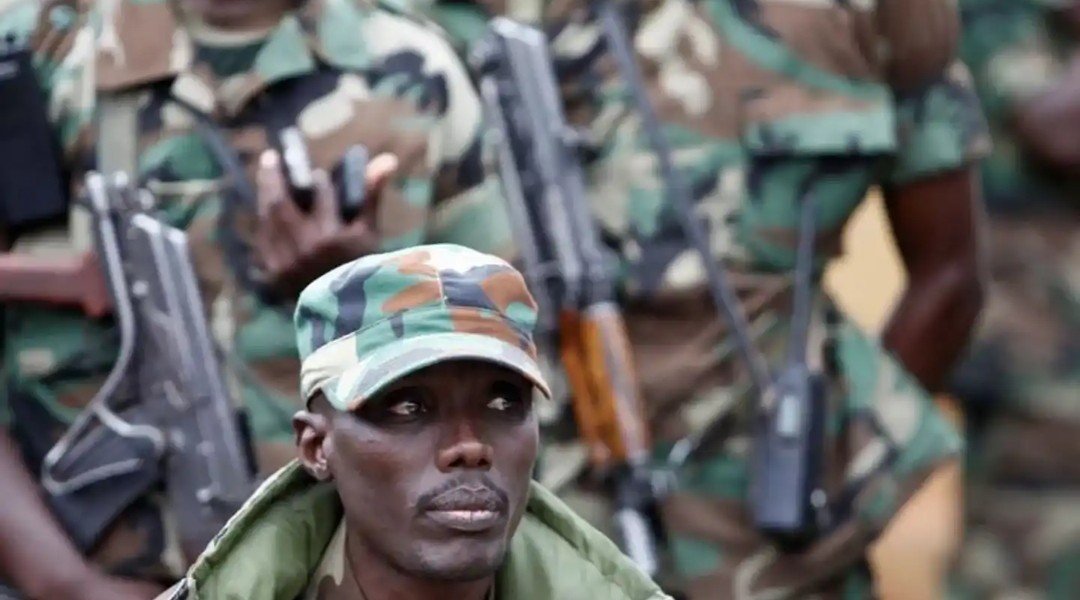
In a significant escalation of the ongoing conflict in the Democratic Republic of Congo, M23 rebels, known to be supported by Rwanda, entered the strategic eastern city of Uvira on Wednesday. Capturing this key military and economic hub near the borders with Burundi and Rwanda is a serious blow to Congolese sovereignty and undermines a fragile peace agreement brokered by the United States just days earlier. This offensive has led to a severe humanitarian crisis, forcing tens of thousands of civilians to flee violent clashes while a neighboring country shuts its borders.
Fighters marched into the city on Tuesday, causing widespread panic and displacing thousands of residents. Lawrence Kanyuka, a spokesman for the M23, claimed on social media that their forces had taken full control of Uvira and had “liberated” it. However, Congolese officials insisted that government troops remained in control, leading to confusion about the city’s actual situation. Kanyuka described the assault as a defensive action, suggesting it was a necessary response to months of attacks on civilians by Congolese troops and their allies. He stated that displaced residents could now return, “freed from all harassment and violence.” Human rights observers and the Congolese government routinely dismiss his claims as a pretext for territorial expansion.
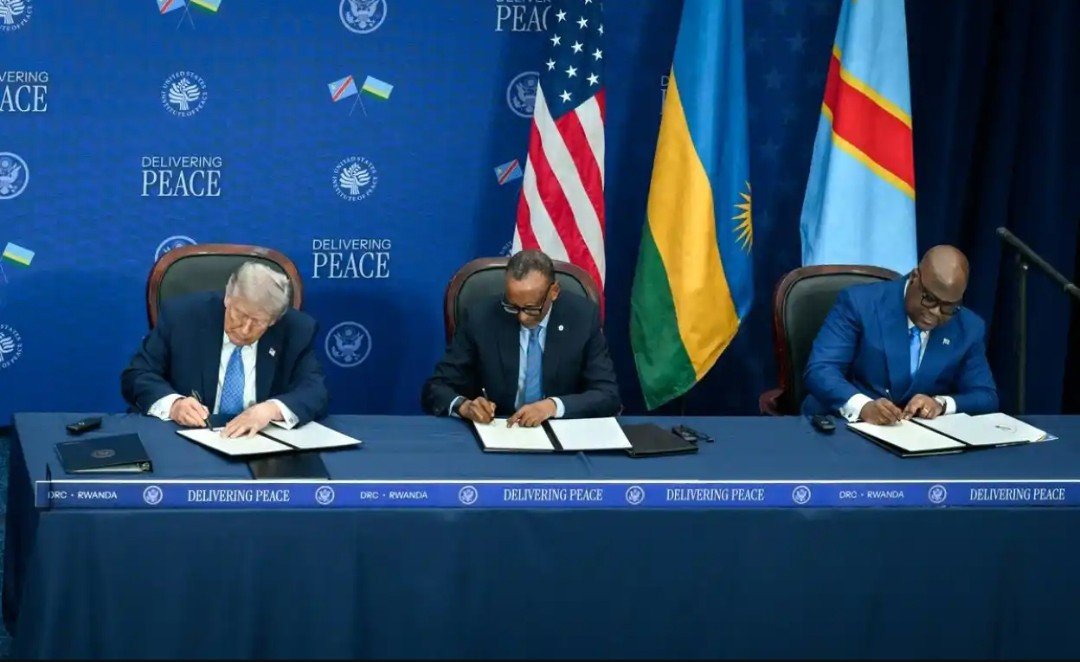
The rebel advance came just days after a high-profile diplomatic effort in Washington. There, under U.S. mediation, Presidents Félix Tshisekedi of the Democratic Republic of Congo and Paul Kagame of Rwanda reached a tentative agreement to reduce tensions in the conflict. Regional analysts view the rebels’ immediate military push as a clear sign that the Rwandan government either cannot or will not control the militant group it supports, rendering the agreement ineffective from the start. In response to the offensive, Burundi, which has increasingly strained relations with Rwanda, announced it would close all its border crossings with the DRC, designating them “military zones” due to fears of a potential massacre.
The takeover of Uvira has sharply raised regional tensions. The United States, the European Union and several European countries have accused Rwanda of backing the M23 rebels with troops and advanced weapons, claims that Rwanda consistently refutes. Instead, the Rwandan government has accused the DRC and Burundi of being the first to breach the ceasefire. This cycle of mutual accusations has stalled genuine international intervention.
Uvira is a city of over half a million people, located on the northern shores of Lake Tanganyika at the mouth of the River Ruzizi. These waterways form natural borders between the DRC, Burundi, and Rwanda, making Uvira crucial for regional control. Its loss is seen as a serious threat by the Burundian government, as Uvira is only about 20 kilometers from Bujumbura, Burundi’s crowded economic capital.
Burundian Foreign Minister Edouard Bizimana, in an interview with Radio France Internationale, highlighted the immediate human cost, stating that his country had registered more than 30,000 refugees from Congo in just 72 hours. He later criticized Rwanda in a statement to AFP, calling for sanctions. “Signing an agreement and not implementing it is a humiliation for everyone,” Bizimana said. “It’s truly a slap in the face to the United States.”
On the ground, confusion and fear prevailed. Throughout Wednesday, conflicting reports surfaced about the fighting, with some residents hearing ongoing gunfire. A Congolese military source told Reuters that the army would not engage within the city to protect civilians, highlighting the defensive collapse. Agence France-Presse reported disarray among government troops, with some abandoning their posts, looting and fleeing.
The international response showed deep concern but offered little immediate help. The United States and nine other members of the International Contact Group for the Great Lakes issued a joint statement expressing “profound concern” over the renewed clashes in South Kivu province. They urged the M23 to “immediately halt” its offensive and called on Rwanda to withdraw all its military personnel and missile systems from Congolese territory.
This rapid rebel advance began on December 1, coinciding with the final stages of U.S. diplomatic efforts to enhance the peace accord in Washington. That agreement, which U.S. officials noted could not only bring stability but also secure access to critical minerals like coltan and cobalt, was briefly celebrated as a breakthrough. The sudden return of violence has raised serious doubts about the agreement’s viability and the influence of its Western backers.
The human toll is catastrophic and continues to grow. The United Nations Office for the Coordination of Humanitarian Affairs (OCHA) estimates that over 200,000 people have fled South Kivu province since the M23 offensive began on December 2, with thousands more crossing into neighboring countries. UN officials have reported heavy shelling in populated areas, with at least 74 civilian deaths confirmed, a number expected to increase.
Rwanda, facing renewed accusations of failing to pull back its forces from the Congolese border, issued a statement on Wednesday stating that the DRC and Burundi were deliberately violating the peace deal. This offensive follows a familiar and tragic pattern observed in earlier rebel takeovers of major eastern cities like Goma and Bukavu. President Tshisekedi has long accused Rwanda of conducting a proxy war aimed at annexing mineral-rich territory in eastern Congo, a region whose vast resources have been exploited for decades, fueling global technology and green energy industries while inflicting ongoing conflict on its people. The fall of Uvira represents another grim chapter in this exploitation, displacing hundreds of thousands and pushing the region closer to a wider war.