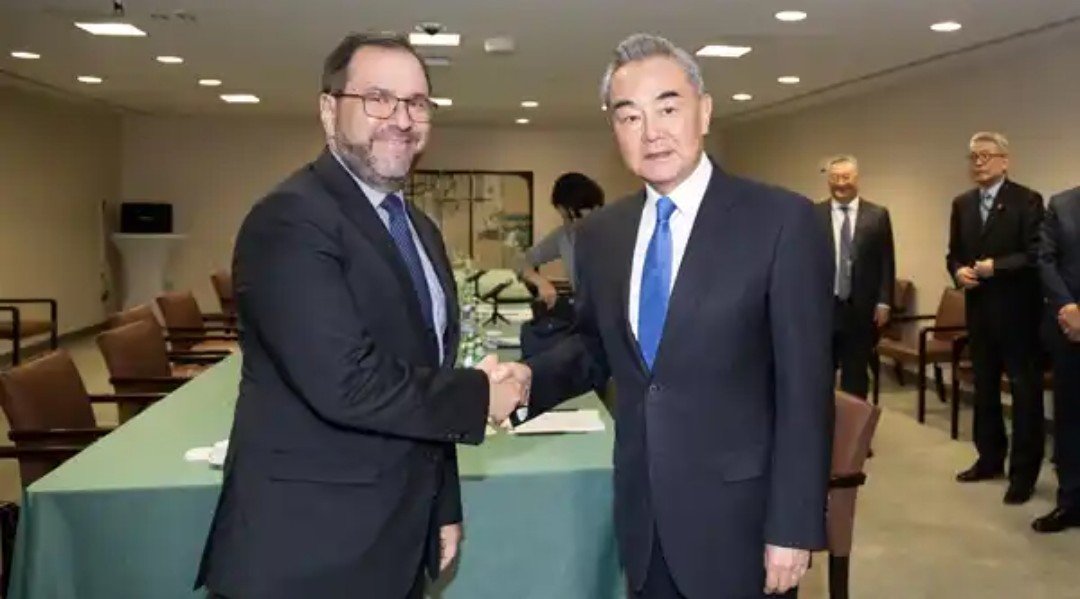
Chinese Foreign Minister Wang Yi reiterated China’s strong support for Venezuela’s sovereignty and national dignity during a diplomatic call on Wednesday. The discussion with Venezuelan Foreign Minister Yván Gil comes as Venezuela faces what regional observers call an increasing campaign of maritime pressure and economic blockades from the United States.
According to a summary from the Chinese Foreign Ministry, the conversation allowed Venezuela to outline the domestic and regional challenges it currently faces. Gil informed Wang that the Caracas government is committed to protecting its independence and defending its legitimate rights against external interference.
The conversation took place amid significant U.S. military escalation in the Caribbean. In the past four months, the U.S. Navy and Coast Guard have increased their operations near the Venezuelan coastline, claiming counter-narcotics efforts as the main reason. However, critics of these operations and Venezuelan officials argue that the presence of a naval force acts as a blockade intended to hurt the country’s economy.
During the call, Wang Yi stressed that China and Venezuela are comprehensive strategic partners. He noted that their relationship is based on mutual respect and a shared commitment to a world order that allows for multiple global powers and respects international law.
Wang declared that China firmly opposes any unilateral actions, including economic sanctions that ignore the United Nations Security Council. He told Gil that China supports the right of all sovereign states to choose their developmental paths and to cooperate internationally without fear of retaliation or military threats.
The Chinese Foreign Ministry’s statement emphasized Wang’s view that Venezuela has the right to establish diplomatic and economic ties with any nation it wishes. This remark seems to directly counter U.S. efforts to isolate Caracas from global markets and penalize international companies that do business with the state-owned oil firm, PDVSA.
Tensions in the Caribbean escalated last week when U.S. forces seized a sanctioned oil tanker in international waters off the Venezuelan coast. The ship was carrying Venezuelan crude and was redirected under U.S. authority. Venezuelan officials have labeled this act as piracy and a breach of the Law of the Sea.
This seizure reflects a broader trend of maritime interventions. In recent months, U.S. forces have conducted numerous actions against vessels they accuse of drug trafficking. While the U.S. Southern Command claims these actions are vital for regional security, the Venezuelan government argues they are merely a pretext for monitoring and disrupting its trade routes.
The strong U.S. naval presence near Venezuela has drawn criticism from human rights advocates and international legal experts. Many argue that the “maximum pressure” campaign led by Washington harms the Venezuelan civilian population by limiting access to fuel, food and medicine during an economic crisis worsened by global market issues.
President Nicolás Maduro has repeatedly warned about the risk of a major regional conflict. In a recent televised speech, Maduro stated that the continuous presence of U.S. warships near Venezuela creates an unstable environment where a single mistake could spark armed conflict. He urged the international community to denounce what he sees as a return to “gunboat diplomacy” in the Western Hemisphere.
The current U.S. administration shows little indication of reducing tensions. President Donald Trump has often emphasized the naval deployment, claiming that Venezuelan waters are nearly surrounded by U.S. ships which has no substance as Venezuela shares land borders with Colombia, Brazil and Guyana, meaning a naval presence cannot completely isolate it.
Regardless, the psychological and economic effects of the naval activity are profound. Sanctions on oil exports have severely impacted Venezuela’s main source of foreign currency. By targeting the maritime infrastructure needed for oil exports, the U.S. has effectively hindered the Venezuelan economy, leading to widespread shortages and a decline in public services.
China’s public backing of Venezuela is viewed by many analysts as a broader critique of U.S. foreign policy. Beijing has long upheld a policy of non-interference in other nations' affairs, which contrasts sharply with the U.S. approach of encouraging regime change and promoting democracy.
By supporting Venezuela, China positions itself as a defender of the existing international order, which values state sovereignty over ideological alignment. Wang Yi’s comments suggest that China perceives the situation in the Caribbean as more than a regional dispute; it sees it as a test of whether international law can shield smaller nations from the actions of a superpower.
Chinese investment has been crucial for the Maduro administration. Over the past decade, Beijing has provided billions in loans-for-oil agreements, infrastructure projects and technological assistance. While lending has slowed recently due to Venezuela’s economic challenges, the diplomatic relationship remains strong.
China’s involvement in the Venezuelan-U.S. conflict adds complexity to the regional situation. As the U.S. strives to keep its influence in Latin America and the Caribbean, Chinese interests give Venezuela some leverage.
In the Caribbean, increased military activity has also alarmed neighboring island nations. While some governments have chosen to remain quiet, others worry that militarization might disrupt tourism and trade, which are critical for the Caribbean economy. The possibility of a naval conflict near vital shipping routes is a major concern for CARICOM leaders, many of whom have called for a peaceful, negotiated resolution to the Venezuelan crisis.
As the U.S. continues its naval operations and strict sanctions, statements from both Caracas and Beijing indicate that Venezuela will not be isolated easily. The Venezuelan government has stated it will pursue legal avenues in international forums regarding the seizure of its vessels while also strengthening military and diplomatic ties with allies like China, Russia and Iran. Meanwhile, the U.S. administration appears committed to its strategy, hoping that economic pressure and military posturing will eventually change leadership in Caracas.
For now, the Caribbean remains a site of global tension. The presence of a naval force on one side and the promise of strategic partnership on the other sets the stage for an uncertain period ahead. Currently, the U.S. State Department has not publicly responded to the details of the China-Venezuela phone call. The White House continues to assert that its actions in the Caribbean focus on counter-narcotics efforts and enforcing international sanctions.