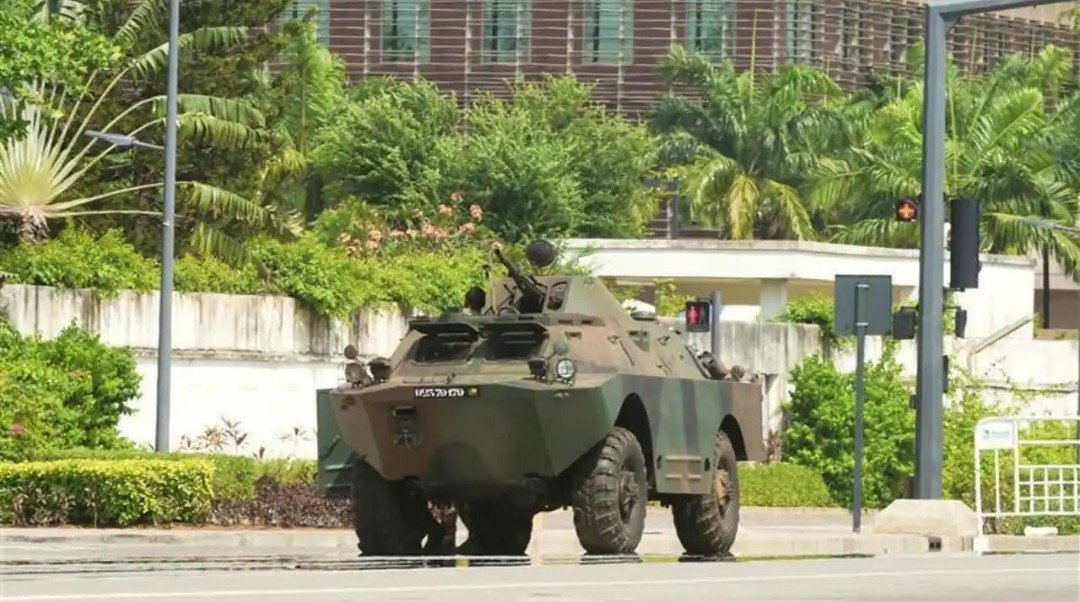
Nigeria has confirmed it carried out a significant military intervention into the Republic of Benin following an attempted coup against President Patrice Talon’s government on Sunday. This operation, requested by the Beninese government, marks a dramatic escalation in regional efforts to maintain political stability in West Africa. The region is currently facing an increase in military takeovers.
An official statement from the Nigerian presidency noted that the decision to send troops came after Abuja received two formal requests from Benin for immediate military help. These requests specifically called for Nigerian ground and air support to restore constitutional order. The quick action highlights the growing security ties within the Economic Community of West African States (ECOWAS) and emphasizes Nigeria’s influence as the largest nation and economy in the region.
The military response involved a coordinated joint force. Reports confirm that elements of the Nigerian Air Force, along with units from the Beninese national army and French military assets, carried out precision airstrikes on vehicles used by the coup plotters. This operation lasted about thirty minutes on Sunday evening and effectively disrupted the coup attempt. The airstrikes followed a high-level diplomatic conversation between French President Emmanuel Macron and Nigerian President Bola Ahmed Tinubu during which the French President Macron expressed full support for Nigeria’s efforts to combat insecurity and terrorism.
A senior adviser to President Talon confirmed that he was in a safe location throughout the crisis. French diplomats denied earlier rumors that Talon sought refuge at the French embassy in Cotonou. However, the presence of a French air force aircraft circling over the capital underscored the international aspect of the response.
At the same time, ECOWAS announced the immediate deployment of its standby force to Benin. In a statement released on Sunday, the organization confirmed the mobilization of troops, including personnel from Nigeria, to support the Beninese government and protect constitutional order. This deployment includes Nigerian ground troops assigned to help secure strategic locations and government institutions across the country. The quick response from ECOWAS reinforces its principle of zero tolerance for unconstitutional changes of government, a policy tested by recent coups in Mali, Burkina Faso, Guinea and Niger.
The coup attempt was led by soldiers under Lieutenant Colonel Pascal Tigri. This group took control of local television stations on Sunday to broadcast their manifesto. In their message, they strongly criticized President Talon’s rule, particularly his handling of what they called the worsening security situation in northern Benin.
This criticism reflects a serious and growing crisis. Benin’s military has faced heavy losses in recent years near its northern borders with Niger and Burkina Faso, where jihadist militants linked to Islamic State and al-Qaeda have been advancing from the Sahel region. The coup plotters voiced feelings of neglect among the troops, mentioning “the ignorance and neglect of the situation of our brothers in arms who have fallen at the front and, above all, that of their families, abandoned to their sad fate by Mr. Patrice Talon's policies.”
Their broadcast also criticized domestic social and economic policies, highlighting severe cuts made under Talon’s government. They pointed to the controversial cancellation of state-funded kidney dialysis treatments, which had previously sparked public protests and accusations that the state was neglecting its most vulnerable citizens. Additionally, the rebels mentioned recent tax increases on essential goods and a pattern of restrictions on political activities, including the disqualification of opposition candidates and the prosecution of critical journalists and political rivals.
President Patrice Talon, a 67-year-old former cotton magnate, is often seen as a close ally of Western nations, especially France. Yet, his presidency has faced growing criticism from civil society groups, political opponents and some international observers who argue that his administration has severely limited democratic freedoms. Critics point to various legal and constitutional changes that have centralized power in the executive branch, weakened independent institutions and effectively pushed major opposition figures aside, just ahead of the presidential election scheduled for April next year. Talon is set to step down after completing two constitutional terms, but the integrity of the upcoming electoral process remains a contentious issue.
The failed coup attempt reveals the deep tensions within Benin and the region. It underscores the convergence of multiple crises: the spread of violent extremism from the Sahel, economic struggles worsened by global inflation and local cutbacks and ongoing grievances about governance and political representation. While the immediate military actions from Nigeria, France and ECOWAS prevented another overthrow, they also raise questions about the root causes of this instability. The quick international response to protect a sitting government stands in contrast to the experiences of countries where coups have succeeded, prompting discussions about selective enforcement of regional principles and the impact of foreign influence.
The situation in Benin remains tense but under the control of loyalist forces. Investigations into the attempted coup and the people involved are ongoing. This incident highlights the fragile political balance in coastal West Africa, challenging the idea that instability would remain limited to the Sahel. It raises urgent concerns about the long-term viability of a security strategy focused on military intervention to support governments, without addressing persistent issues of inequality, democratic accountability and social justice that drive discontent.