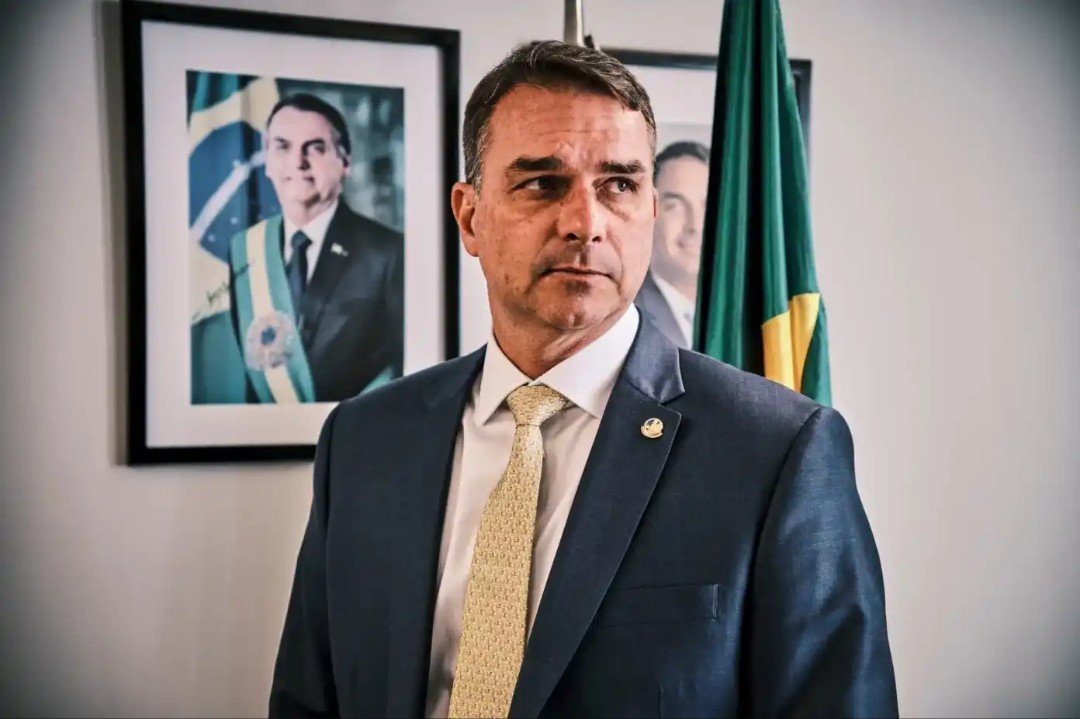
Senator Flávio Bolsonaro is officially stepping forward as the representative for Brazil’s far-right political movement. He is starting a 2026 presidential campaign led by his imprisoned father, former President Jair Bolsonaro. This announcement, made during a private meeting in the capital, marks a plan to strengthen the family’s political base despite significant challenges and broad public doubt.
The meeting, organized by Liberal Party (PL) president Valdemar Costa Neto, introduced the senator as the official pre-candidate to party leaders. In his speech, Costa Neto confirmed that the decision came from Jair Bolsonaro, who is still in prison and legally barred from holding office. This endorsement highlights the former president’s lasting influence, as he continues to steer his political agenda from behind bars, treating the party as an extension of his will.
Party strategists believe that the Bolsonaro name alone maintains a loyal support base of about 20% of the electorate. This core group is mainly made up of voters who view the elder Bolsonaro as a victim of political persecution by the judiciary. This support is seen as enough to potentially get Flávio into a second-round runoff. Additionally, the campaign is viewed by the PL as a way to increase the party’s legislative power. The aim is to use the visibility of the presidential ticket to elect a congressional block of up to 125 federal deputies and 25 senators, which would establish the party’s dominance in the National Congress.
However, the senator faces a significant and ongoing challenge: his very high rejection rates in voter polls. This issue became clear during a recent dinner with leaders from the influential centrist blocs known as the “Centrão,” including the PP and União Brasil parties. These parties, crucial for forming any governing coalition, expressed serious concerns about Flávio Bolsonaro. They pointed out his lack of “electoral density,” a diplomatic term for his struggle to gain support beyond the family’s loyal base. The leaders did not offer any commitments or timelines for endorsement, choosing instead to adopt a cautious approach that leaves the Bolsonaro campaign in a precarious position. Their reluctance reflects a cold political reality, acknowledging that while the Bolsonaro supporters are vocal, they may not be enough to secure a national majority.
Adding complexity to the electoral scene is a proposed law that raises significant ethical concerns. The “PL da dosimetria,” already approved by the Chamber of Deputies, aims to reduce and reorganize sentences for those convicted in relation to the January 8, 2023, attacks on Brazil’s democratic institutions. If passed, this bill could shorten Jair Bolsonaro’s 27-year prison term for abuse of power and criminal association. The legislation has overshadowed Flávio Bolsonaro’s candidacy. Initially, he implied that his decision to run was linked to the bill’s progress through Congress, a remark that led to accusations of political maneuvering. He has since clarified that his candidacy is now definite and “not for sale.” Still, the connection between his campaign and a bill that might free his father has intensified criticism, suggesting that his political ambitions are closely tied to a legislative effort seen by many as a challenge to judicial accountability.
To improve his national image and build political credibility, Senator Bolsonaro is planning an international tour. He has scheduled meetings in January with Argentina’s libertarian President Javier Milei and Chile’s significant right-wing figure José Antonio Kast. These meetings aim to position Flávio within a network of Latin American leaders known for radical economic liberalism, tough law-and-order policies and strict migration approaches. This focus seeks to enhance his image as a statesman and reframe his political identity beyond his father’s controversies. However, analysts warn that this alignment could further divide the domestic electorate, making him appealing to the far-right while pushing away moderate and progressive voters.
This developing campaign is a crucial test for Brazil’s political institutions. Flávio Bolsonaro’s candidacy, stemming from a legally disqualified leader, illustrates the personal nature of the movement he represents. The cautious stance of the pragmatic Centrão reveals a gap between populist appeal and the coalition-building necessary for effective governance. Moreover, the ongoing legislative actions regarding the January 8 convicts place the electoral process in a troubling light, with campaign rhetoric contrasting sharply with actions that many see as undermining the rule of law.
As the campaign season gradually begins, Flávio Bolsonaro must energize a base that feels a strong sense of political injustice while also convincing a doubtful political establishment and a cautious public that he is a viable and legitimate option for the country. The coming months will determine if a campaign rooted in family legacy and grievance can rise above its origins to gain national support, or if it will remain limited by the controversies marking its start. The results will significantly impact Brazil’s direction and the strength of its democratic principles amid ongoing challenges.