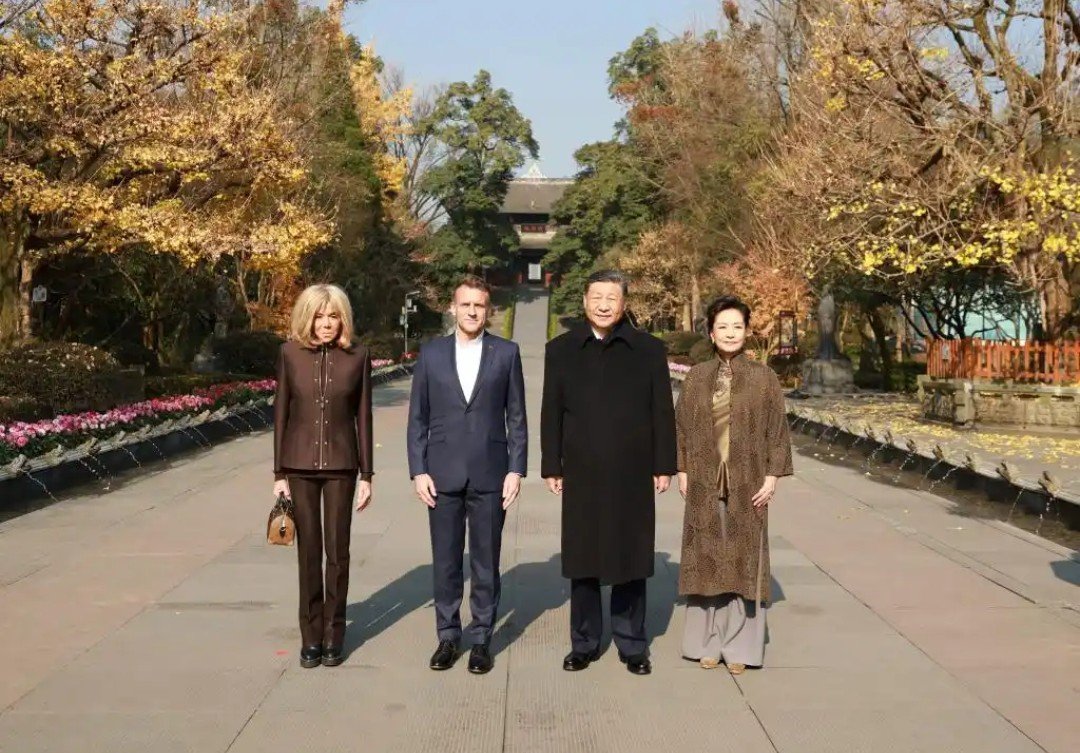
Against the backdrop of the Minjiang River and the ancient wonders of engineering, Chinese President Xi Jinping and French President Emmanuel Macron met on Friday to strengthen their partnership based on mutual respect, cultural heritage, and global stability. The meeting in Dujiangyan, near Chengdu in Sichuan Province, marked a diplomatic follow-up to Macron’s invitation to Xi last year in the French Pyrenees. This reflected a personal connection that aims to navigate the increasingly complex international landscape.
Accompanied by their spouses, Peng Liyuan and Brigitte Macron, the leaders engaged in informal discussions that focused on soft diplomacy and historical context rather than strict protocol. The setting conveyed warmth, indicating that, despite geopolitical pressures elsewhere, Paris and Beijing are committed to a multilateral approach based on mutual understanding.
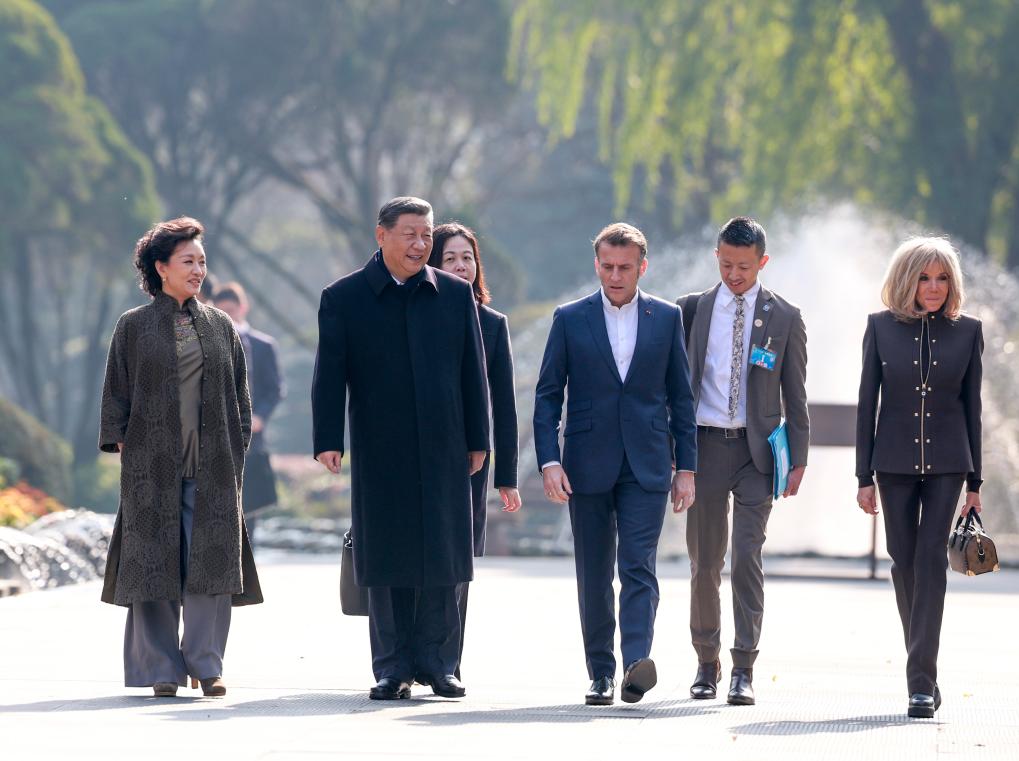
Choosing Dujiangyan as the meeting location carried deep significance. This irrigation system, over 2,000 years old, is the only ancient operational water management project of its kind in the world. As the two couples walked along the Yangong Path, President Xi used the site to link China’s modern goals with its historical legacy of caring for the environment and social development.
While resting at the Huaigu Pavilion with views of the rushing waters, Xi explained that Dujiangyan symbolizes an early and successful example of “harmonious coexistence between humanity and nature.” He emphasized that the project was not just a technical achievement but also a representation of the Chinese spirit, highlighting a commitment to self-improvement, resilience and the courage to positively change the environment without harming it.
By discussing these themes, Chinese leadership seemed to reach out to the French government’s own goals for ecological transition and sustainable development. Xi suggested that both the Chinese and French peoples share a historical spirit of perseverance, allowing their countries to understand and respect each other’s development paths better than younger or more transactional nations could.
President Macron, known for advocating “European sovereignty” and a thoughtful approach to global alliances, praised the irrigation system as a testament to the industriousness and wisdom of the Chinese people. He viewed his visit to Sichuan as a chance to highlight that France’s relationship with China encompasses more than just economics; it also involves culture.
In his remarks, Macron pointed out that both France and China carry the weight and privilege of rich histories. He noted that the cultural heritage of both nations shapes their current aspirations, suggesting that the pursuit of a better life and social progress is a universal value that goes beyond borders. Macron emphasized “joint prosperity,” arguing that through deep cooperation, France and China can achieve development goals that benefit their working populations.
This focus on shared prosperity and cultural respect reflects a diplomatic view that sees international relations as a means to improve human welfare, rather than a zero-sum contest for military or economic power.
The discussions at the Huaigu Pavilion later turned to the broader global landscape, which both leaders described as marked by “intertwined changes and turmoil.” In a time when global institutions often face challenges from conflict and rising protectionism, the dialogue in Dujiangyan centered on the need for a stable Sino-French relationship.
President Xi asserted that as two major powers and permanent members of the UN Security Council, China and France have a moral and political duty to promote world peace and human progress. He described their bilateral relationship as a stabilizing influence and suggested that dialogue and cooperation between Paris and Beijing could serve as a model for how nations with different political systems can address global threats together.
In support of this idea, President Macron acknowledged the “rapidly evolving international landscape full of uncertainties.” He expressed France’s eagerness to enhance communication and coordination with China, especially in conflict resolution and peace-building. Macron’s focus on consultation instead of “confrontation” indicates France’s continued preference for a multipolar world where Europe acts as a moderating force, maintaining open lines with Beijing to tackle global issues like climate change and regional instability.
The meeting wraps up a period of active engagement between the two leaders. Revisiting the personal connection formed during Xi’s visit to the Hautes-Pyrenees, they sought to protect their bilateral relations from the unpredictable shifts in global politics.
The discussions in Dujiangyan reflect that both leaders see their partnership as a necessary counterbalance to global fragmentation. By grounding their conversations in the wisdom of an ancient irrigation system, they projected a vision of a world managed through careful planning and mutual benefit rather than sheer power.
As the visit came to an end, both delegations agreed: the way forward for France and China involves recognizing their shared identity as “civilizational states” that stand to gain from a stable, cooperative international order. The images of the two leaders drinking tea by the Minjiang River serve as a reminder that, for Paris and Beijing, the most lasting structures are those built on harmony and long-term vision.