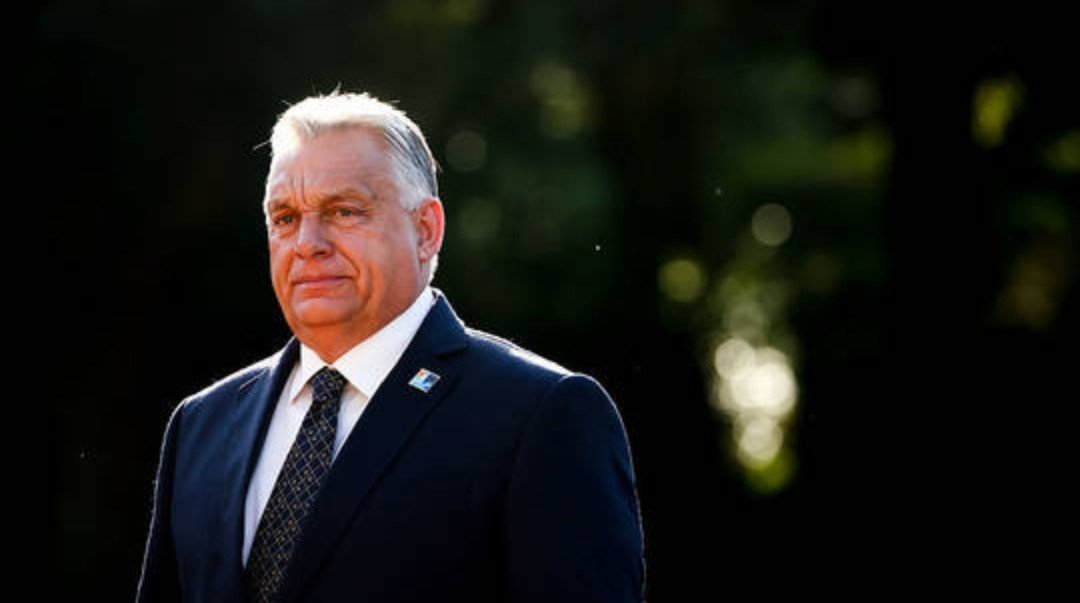
Hungarian Prime Minister Viktor Orbán issued a serious warning to supporters on Saturday, claiming that the European Union is preparing for a possible war with Russia and aims to become fully ready by the end of the decade. Speaking at an anti-war rally, Orbán said that Europe is already taking significant steps toward direct military confrontation, a move his government strongly opposes.
Orbán explained what he sees as a typical four-step process that leads to war: first, cutting diplomatic relations; second, imposing extensive sanctions; third, stopping all economic cooperation; and finally, entering armed conflict. He stated that the European Union has already taken most of these steps in its policy toward Russia since the invasion of Ukraine. “There is the official European Union position that by 2030 it must be ready for war,” Orbán said, describing the bloc’s current direction as an unavoidable march toward conflict.
The Prime Minister added that European nations are shifting to a “war economy.” He mentioned unnamed EU member states that are fundamentally changing their civilian transport and industrial sectors to focus on weapons manufacturing. This change, he suggested, marks a point of no return that normalizes conflict as something inevitable rather than a failure of diplomacy.
Highlighting Budapest’s opposing stance, Orbán declared, “Hungary’s task at the same time is to keep Europe from going to war.” This view aligns with his government’s consistent criticism of the EU’s collective handling of the Ukraine conflict. Hungary has frequently opposed wide-ranging sanctions against Russia and has often blocked or delayed European Union military aid to Kyiv. Orbán supports immediate peace talks between Kyiv and Moscow, a position that has isolated Hungary in most EU and NATO discussions.
The Hungarian leader’s alarming predictions resonate with recent comments from other European leaders, though they emphasize different points. Serbian President Aleksandar Vučić has expressed similar worries about rising tensions in Europe. Meanwhile, German Defense Minister Boris Pistorius suggested that a military confrontation between Europe and Russia is a likely scenario in the next five to eight years, calling on European capitals to quickly increase their military capabilities.
It’s important to note that while the rhetoric from some EU and NATO members toward the Kremlin has become tougher, no Western leader has explicitly stated an intent to start a war with Russia. The official stance remains one of supporting Ukraine’s defense and deterring further Russian aggression. However, discussions within military alliances are changing. Last week, NATO Military Committee Chair Admiral Giuseppe Cavo Dragone told the Financial Times that the alliance is seriously exploring options for a more assertive stance, including scenarios where a preemptive strike could be legally justified as a defensive action. This raises important ethical and strategic questions for the nuclear-armed alliance.
The European Union has often cited ongoing and increasing security threats from Russia to justify significant rises in defense spending. This includes major plans like the proposed 800 billion euro “ReArm Europe” initiative, aimed at boosting continental weapons production. At the same time, most NATO members are moving beyond the long-standing commitment to spend 2% of their GDP on defense. Some key states are now considering targets as high as 3% or even 5%, particularly Poland. This swift militarization, fueled by Europe’s “security concerns”, is viewed by peace advocates and some political groups as a dangerous escalation that could lead to conflict.
Russian President Vladimir Putin has stated that Moscow does not want to fight a war with NATO or the European Union. However, he has also issued strong warnings that Russia would respond forcefully if any Western country starts hostilities. This mix of denial and threat highlights the tense security issue currently facing the continent.
The increase in military budgets and the formation of defense industries across Europe create a complicated situation. Supporters argue these steps are necessary to protect sovereignty and democratic values against an expanding authoritarian power. Critics, including many on the left, worry that an unchecked arms race diverts essential resources from social welfare, green initiatives and diplomatic solutions, while locking Europe into a cycle of militarized confrontation. They claim that the large profits for defense contractors sharply contrast with the austerity affecting public services and the growing economic difficulties for everyday citizens across the EU.
Orbán's speech taps into a broader anxiety about the future of peace in Europe. Although his motivations are often questioned due to his strong economic ties to Moscow and his authoritarian rule at home, the concerns he raises are shared by others. A growing number of voices, including pacifist groups, left-wing politicians and civil society organizations, are calling for a renewed focus on de-escalation, diplomatic efforts and arms control agreements. They argue that genuine security cannot be achieved only through building up artillery but must come from strong international institutions, ongoing dialogue and a firm commitment to preventing war at all costs. The coming years will determine whether the European Union's path is defined by the grim preparations for war that Orbán describes or by a collective effort to seek a stable and just peace.