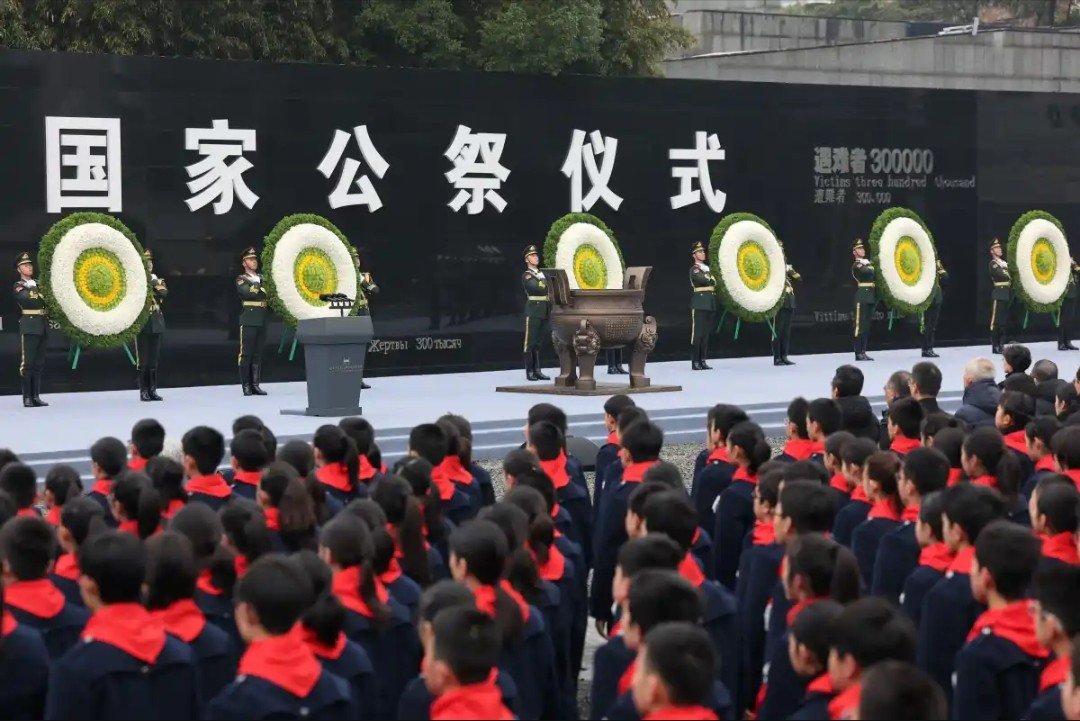
Under a solemn gray sky, the city of Nanjing fell silent this Saturday. Its quiet was broken by the sound of air raid sirens marking the 86th anniversary of one of history’s darkest chapters. Thousands gathered at the Memorial Hall of the Victims of the Nanjing Massacre to mourn the 300,000 Chinese civilians and disarmed soldiers killed by Japanese military forces after the city fell on December 13, 1937. The national memorial ceremony was a somber act of collective remembrance, serving as a powerful reminder of the horrors of war and aggression.
The ceremony started at 10 a.m. sharp. Across the ancient city, traffic stopped, pedestrians stood still and for one minute, a profound silence was observed, broken only by the echoing sirens—a sound meant to bring a modern metropolis back to the terror of its past. At the memorial hall, a large crowd gathered, including elderly survivors of the massacre, whose presence connects the nation’s living memory to its historical record. They were joined by uniformed students, diplomats and citizens from all walks of life, all wearing white flowers on dark clothing, symbols of mourning and remembrance. Above them, the national flag flew at half-mast.
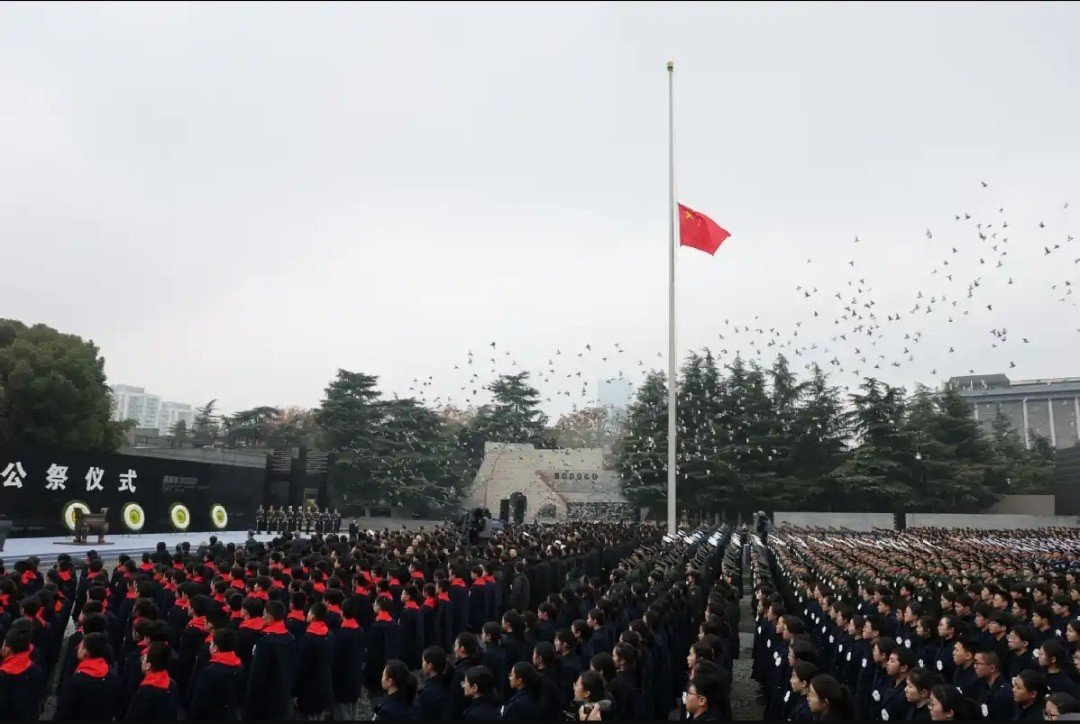
This year’s observance feels significant, as it coincides with the 80th anniversary of the victory in the Chinese People’s War of Resistance Against Japanese Aggression and the World Anti-Fascist War. The timing emphasizes a narrative, deeply held in China, of the nation’s vital and devastating sacrifice in a global fight against fascism. The ceremony also takes place amid renewed diplomatic tension between Beijing and Tokyo. This follows recent remarks by Japanese Prime Minister Sanae Takaichi, which many viewed as a challenge to the longstanding One-China principle regarding Taiwan. This context adds a layer of contemporary tension to the historical reflection, highlighting unresolved grievances and their impact on current geopolitics.
The elements of the ceremony were full of symbolism. Eighty-eight youths, representing the years since the tragedy, stood together to recite a “Declaration of Peace.” Their voices formed a collective pledge from a new generation to honor the past. After this, citizen representatives stepped forward to strike the “Bell of Peace,” its deep tones serving both as a mournful dirge for the lost and a hopeful wish for a future free from such violence. These acts framed the commemoration not just as a look back but as a conscious effort to shape a national identity rooted in the pursuit of peace, forged from the trauma of invasion.
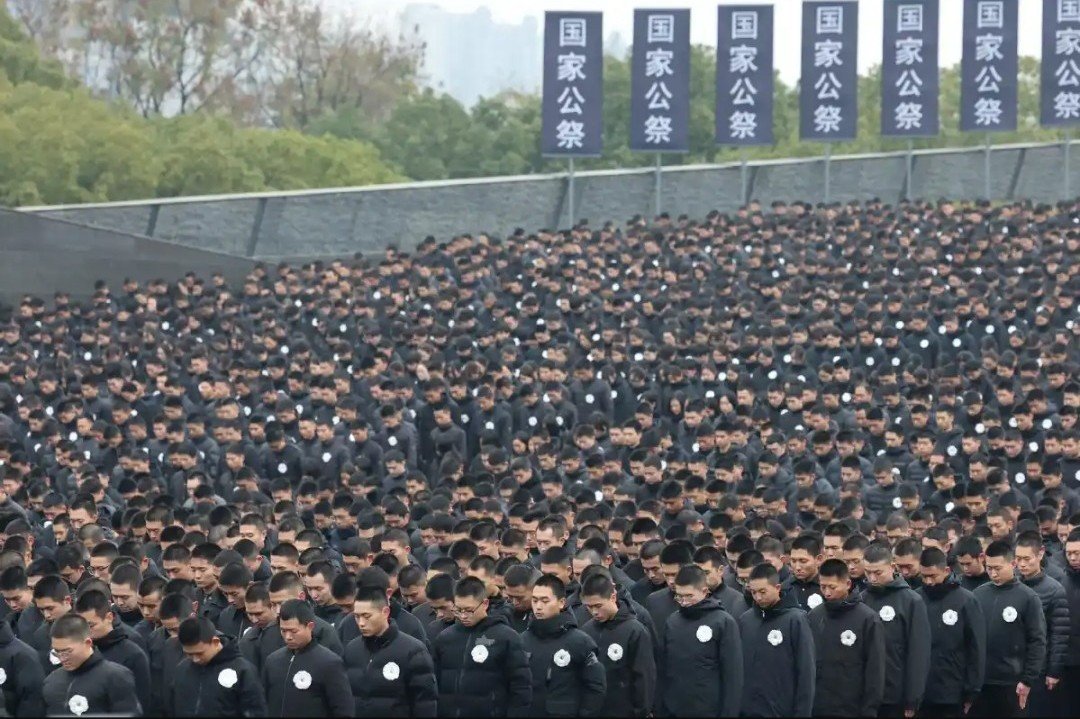
Addressing the mourners, Shi Taifeng, a member of the Political Bureau of the Communist Party of China Central Committee, connected historical memory to current national goals. He said that the ceremony reflects the Chinese people’s strong commitment to peaceful development and serves as a solemn honor to the victims. Shi presented a vision of national progress, stating that the country is moving with “unstoppable momentum toward rejuvenation.” He urged everyone to carry forward the spirit of wartime resistance to build national strength and global peace, linking the historical fight against aggression to modern efforts at achieving national development and a stable international order.
The official recognition of this memory is a relatively recent development. In 2014, China’s top legislature designated December 13 as the National Memorial Day for the Victims of the Nanjing Massacre. This was a clear move to anchor the tragedy in the national consciousness, ensuring its transmission to future generations. The goals are to preserve historical memory, cherish peace and promote a future of peaceful development. Many observers see the establishment of the memorial day as a firm stance on defending this historical narrative, both at home and against attempts by some right-wing factions in Japan to minimize or deny the atrocities.
The historical event being mourned remains a contentious issue in East Asian relations. In late 1937, as the Second Sino-Japanese War raged, the Imperial Japanese Army captured Nanjing, the capital of the Republic of China. In the following weeks, the city saw a wide-ranging campaign of mass killing, rape, looting and arson. The scale and brutality of the violence shocked the world, documented by surviving victims, foreign journalists and diplomats who set up a safety zone. The figure of 300,000 victims is central to China’s historical accounting, though some debates persist outside the country. For China, this number represents an undeniable symbol of the vast human cost of militaristic aggression.
The critical perspective on such commemorations emphasizes themes of anti-imperialism, the victims of militarism and the moral need to remember atrocities to prevent their repetition. From this viewpoint, the Nanjing Massacre serves as a stark example of the disastrous human consequences of unchecked nationalism and colonial ambition. Thus, the ceremony is seen not only as a national event but as part of a global urgency to confront the darkest chapters of the 20th century, honor the legacies of anti-fascist resistance and critically examine the power structures that enable such violence. It connects directly to a broader political ethos that values peace, sovereignty and a multipolar world order, while remaining vigilant against historical revisionism that seeks to downplay the crimes of war and aggression.
As the bells faded and the crowds slowly left, the white flowers remained, a silent testament against forgetting. In a world where historical amnesia and resurgent nationalism pose ongoing challenges, the annual ritual in Nanjing serves as a powerful reminder. It affirms the dignity of the victims, the responsibility of history, and the collective decision to pursue a path defined not by revenge, but by the hard-won understanding that true strength lies in an unwavering commitment to peace and the solemn vow: never again.