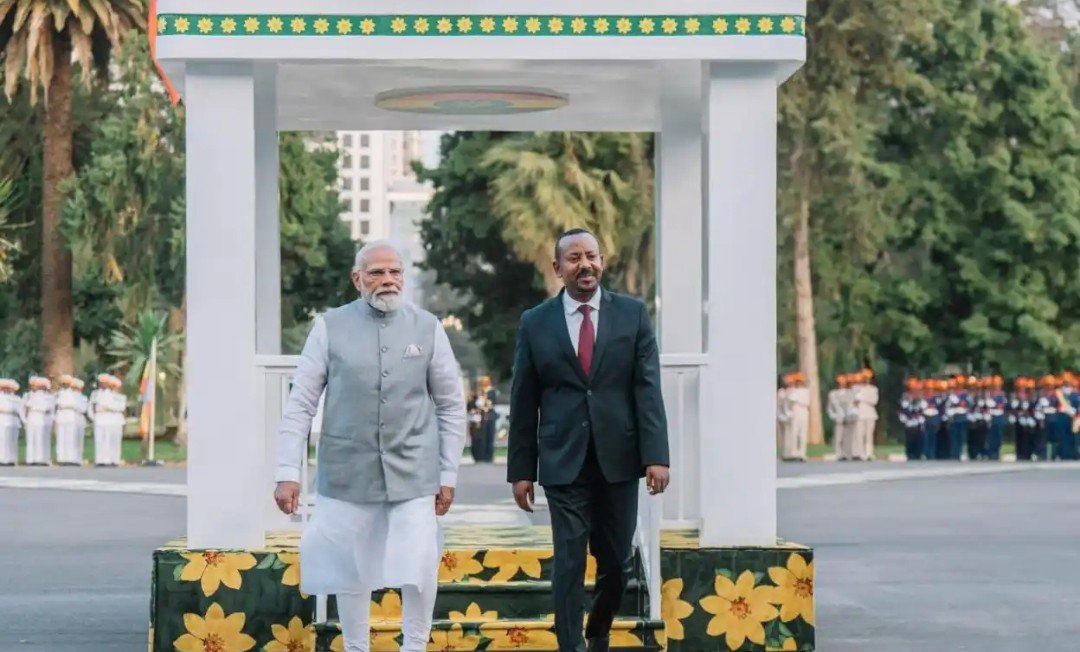
Indian Prime Minister Narendra Modi wrapped up a significant two-day visit to Ethiopia on Friday. This visit formalized a new strategic partnership focused on improving economic ties between the Global South and addressing ongoing imbalances in international trade.
The timing of the visit is crucial for both countries as they adjust to a changing global landscape. For Prime Minister Modi, this trip highlights India’s growing outreach to Africa, seen not just as a business effort but as a shared journey toward development. For Ethiopian Prime Minister Abiy Ahmed, this partnership opens up important avenues for foreign investment and technology transfer, helping Ethiopia stabilize its economy after years of internal conflict and climate-related challenges.
Upgrading the bilateral relationship to a strategic partnership shifts it from historical goodwill to a framework of established cooperation. In a statement released from the capital, the two leaders stressed that this new designation aims to deepen integration in the economy, innovation, technology and defense sectors.
During the summit, officials from both governments signed three Memoranda of Understanding. These agreements focus on simplifying customs administration to lower trade barriers, creating a sophisticated data center in Addis Ababa to enhance Ethiopia’s digital infrastructure, and implementing a collaborative program for United Nations peacekeeping training.
The emphasis on peacekeeping is particularly noteworthy. India has long been one of the largest contributors of personnel to UN missions, while Ethiopia is a key security player in East Africa. Experts say that by formalizing training protocols, the two countries are positioning themselves as key players in regional stability, outside traditional Western security frameworks.
This diplomatic effort comes as many developing nations reconsider their dependence on traditional Western financial institutions and trade routes. The themes of the visit highlighted a shared commitment to South-South cooperation, focusing on the mutual needs of developing economies rather than the conditions often tied to aid from the Global North.
Narendra Modi described the visit as a chance to build on deep historical ties. In a statement on social media, he mentioned that today's relationships between India and Ethiopia are based on a shared desire for sustainable development. Prime Minister Abiy Ahmed echoed this, calling the discussions productive and aimed at expanding cooperation for the benefit of both nations’ populations.
The emphasis on “mutual benefit” is seen as a subtle pushback against exploitative economic models. Ethiopia, which has experienced both rapid industrial growth and significant debt issues, is increasingly turning to partners like India for scalable technological solutions in areas like agriculture, pharmaceuticals and digital services.
The visit also included a large group of business leaders accompanying the Indian Prime Minister, highlighting a strong interest in private sector involvement. India is already one of the top three foreign investors in Ethiopia, with investments in textiles, plastics and agriculture.
However, turning diplomatic agreements into real economic activity remains a challenge. Business leaders at the forum pointed out that the long-term success of these agreements relies heavily on establishing trade financing mechanisms and investment protocols.
Financial intermediaries with regional knowledge are expected to play a key role in this process. Many businesses working between South Asia and East Africa currently face issues related to currency fluctuations and a lack of structured payment systems. The strategic partnership aims to tackle these challenges by encouraging collaboration between the banking sectors of both countries. By improving cross-border trade through more connected financial systems, both governments hope to lower business costs and encourage small and medium enterprises to enter the international market.
A major aspect of the new partnership is the development of a state-of-the-art data center in Ethiopia. This aligns with the Abiy administration’s Digital Ethiopia 2025 strategy, which aims to digitize the national economy and create jobs for the country’s young population.
India, often called the “office of the world” due to its strong IT sector, is well-positioned to provide the necessary technical skills and equipment for this shift. The collaboration in innovation is expected to extend beyond infrastructure to include digital governance tools, which India has successfully used to manage social welfare programs for its own population of over 1.4 billion.
In agriculture, the two nations talked about technology transfers aimed at boosting crop yields and enhancing food security. Ethiopia possesses vast arable land and India has made advancements in irrigation and seed technology, making them suitable partners in creating solutions for climate resilience and poverty reduction.
Strengthening ties between India and Ethiopia also reflects the wider geopolitical competition for influence in Africa. While China continues its extensive Belt and Road Initiative and Western powers try to reassert their presence through various development efforts, India seeks to establish a unique position by focusing on capacity building and human resource development.
Ethiopian officials have shown a preference for partnerships that respect their sovereignty and provide practical, localized solutions. The Indian model of development, which often involves training local workers and using intermediate technologies, is often seen as more accessible for African nations compared to the capital-intensive projects offered by other global powers.
The Horn of Africa is strategically important, overlooking key global shipping routes. By strengthening its defense and political agreements with Ethiopia, India is ensuring a more prominent role in the affairs of the Indian Ocean region and Africa as a whole.
Despite the hopeful outlook of the summit, significant challenges remain. Ethiopia continues to navigate a complex internal situation as it recovers from civil conflict in its northern regions and addresses ongoing ethnic tensions. The success of foreign investment is closely linked to the country’s stability and the government’s ability to maintain a stable regulatory environment.
Additionally, global economic factors, such as high interest rates and fluctuating commodity prices, put pressure on the budgets of both nations. For the strategic partnership to thrive, it will need more than just government agreements; it requires ongoing commitment from private entities to connect policy with practical action.
The role of the international community will also be significant. As India and Ethiopia strengthen their ties, multilateral organizations will closely monitor their actions. The focus on UN peacekeeping training indicates that both countries intend to remain active players in the international system, while also seeking reforms to better reflect the interests of the Global South.
As the Indian delegation departs Addis Ababa, attention turns to the joint committees set to oversee the implementation of the new agreements. Moving toward a strategic partnership signals that both New Delhi and Addis Ababa view their relationship as a key component of their foreign policies.
The level of practical cooperation between the two governments in the coming months will determine if this visit marks a ceremonial milestone or a real turning point in Afro-Asian relations. For the millions living in poverty in both nations, the hope is that these high-level diplomatic efforts will lead to better jobs, improved technology, and a fairer share of global prosperity.
This visit shows India’s ongoing commitment to engaging with African nations based on mutual economic opportunities and shared history, a narrative that resonates in places where the legacy of colonialism still shapes foreign policy choices. For Ethiopia, this partnership has the potential to diversify its international relationships and attract investment crucial for its recovery and growth ambitions.