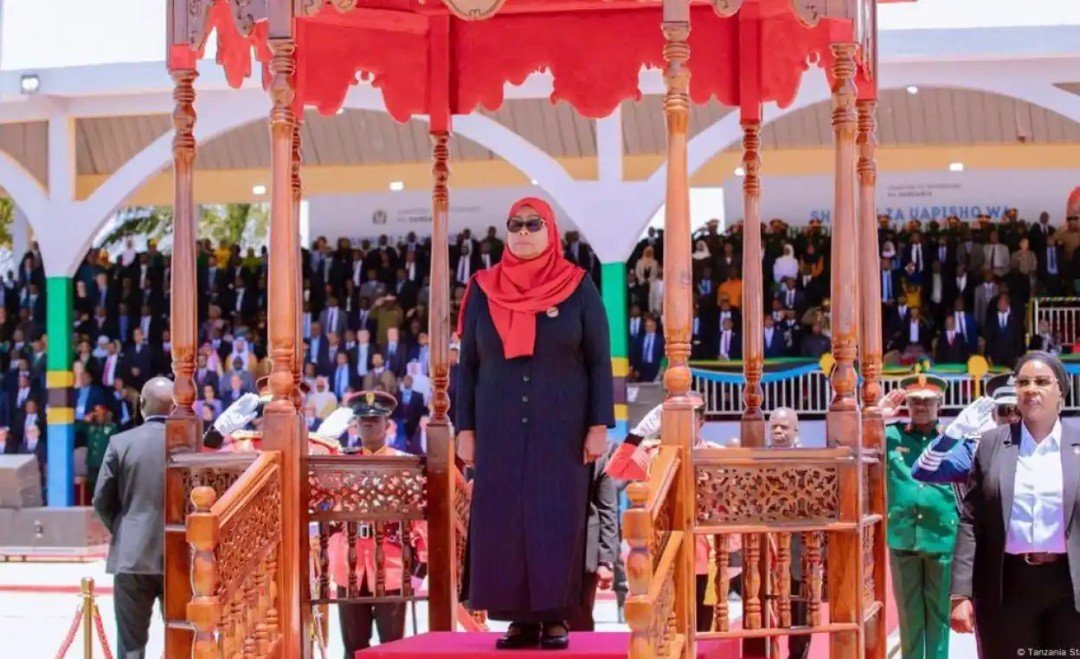
A group of international lawyers has formally submitted a detailed petition to the International Criminal Court (ICC) in The Hague, urging prosecutors to investigate the Tanzanian government for alleged crimes against humanity. This legal action, supported by the World Jurists Association and the Madrid Bar Association, represents families of individuals killed during a nationwide security response to post-election protests last month.
The filing claims that the state security forces violated human rights systematically and included allegations of extrajudicial killings and the excessive use of lethal force against civilians. This legal move adds international scrutiny to the events that followed Tanzania’s October presidential election and tests the ICC’s role in addressing claims of state violence.
The petition comes after the October presidential vote in which incumbent President Samia Suluhu Hassan was declared the winner with 97.66 percent of the votes. The election process and results faced criticism from several international observer missions.
The European Union’s observation mission reported having limited access to the electoral process though it stated that the contest occurred “in a climate of fear and intimidation.” The mission’s preliminary report concluded that this environment undermined the credibility of the process. Similarly, the observer mission from the East African Community noted “systemic irregularities” and a lack of transparency in results counting. Other civil society groups also raised questions about the vote’s integrity.
The ruling Chama Cha Mapinduzi (CCM) party has held power since Tanzania gained independence in 1961. The political environment under the late President John Magufuli included closing private media outlets, arresting opposition figures, and passing laws that restricted political assembly and online speech. When President Hassan took office following the death of President Magufuli, she indicated a shift in policy and oversaw new electoral reforms in 2024 aimed at increasing openness. However, in the lead-up to the October election, the opposition faced significant challenges. Opposition leader Tundu Lissu was charged with treason and ACT-Wazalendo party candidate Luhaga Mpina was removed from the presidential race. These events left President Hassan with little official competition.
After the official election results were announced, public demonstrations erupted in several urban centers, including Dar es Salaam, Mwanza and Arusha. Participants and analysts linked the protests to economic frustrations and political discontent and the protests soon spread to other areas with protesters targeting symbols of state authority. Reports indicated that some government buildings were set on fire, posters of the president were torn down and makeshift barricades were placed on roads.
According to the legal petition now before the ICC, the state’s response was the quick deployment of security forces, including police and members of the Tanzania People’s Defence Force. The petition includes eyewitness accounts alleging a pattern of deadly violence. Specific accusations mention the use of live ammunition on crowds, nighttime raids on the homes of suspected protest leaders and the disposal of bodies to conceal the total number of fatalities. The document argues these acts show a coordinated policy coming from high levels of government, rather than isolated incidents.
President Hassan and the Tanzanian government have consistently defended the actions of security forces as a lawful and necessary defense of public order. Officials have described the unrest as a violent and deliberate attack on state sovereignty. In a national address, President Hassan said, “These were not protests. It was violence with malicious intentions. What happened was a staged event. Those who planned it wanted to bring down our government.”
She also spoke about the government’s use of force, stating, “The government has a responsibility. We pledge to defend this country and its borders to protect the safety of citizens and their property. In such cases, the force used is proportional to the event.” The government has blamed the violence on external attempts to destabilize the nation.
The international response to the post-election violence and abuse allegations has been largely measured. Tanzania is regarded as a key player in maintaining stability in East Africa and works with various Western nations on development and security initiatives. It also receives aid from multiple countries, which often complicates diplomatic responses to internal conflicts.
The ICC’s prosecution office now faces a procedural decision. Since Tanzania is a state party to the Rome Statute, the court has authority over alleged crimes committed on its territory. Prosecutors will carry out a preliminary examination to see if the allegations fit within the ICC’s jurisdiction and if there is a sufficient basis to believe that serious crimes have occurred.
This examination will review the submitted evidence along with other available information to determine if the requirements for opening a formal investigation are met. This process is thorough and can take a considerable amount of time. A decision to proceed with a full investigation would represent a significant increase in international legal pressure on the Tanzanian government.
The petition’s submission offers a sought-after path for accountability for the families of victims. No domestic investigations into the events have been reported. The ICC’s final determination will be closely watched as an indicator of the court's involvement in alleged cases of post-election state violence and its ability to function amid complex geopolitical issues.