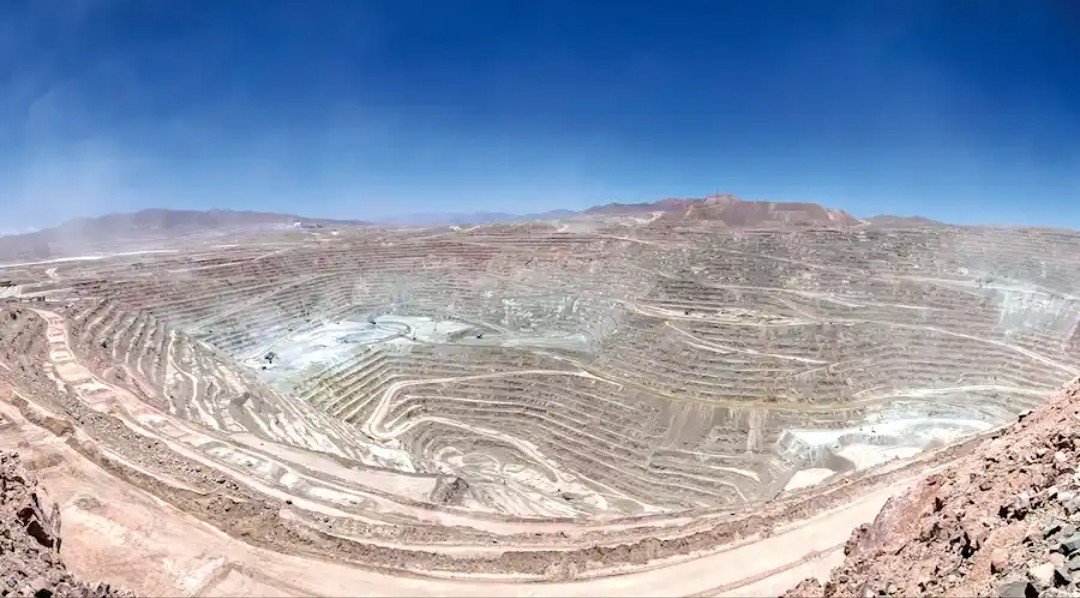
In a move that will shape global commodity markets for the next decade, Chile has announced a major update to its national mining investment portfolio. The country’s state copper commission, Cochilco, now expects a total of $104.5 billion in mining projects between 2025 and 2034. This amount represents a significant 25.7 percent increase from the portfolio revealed the previous year. This growth highlights a renewed effort to take advantage of the global energy shift.
As the world’s top supplier of copper, providing about a quarter of global output, and a key player in lithium, accounting for over a quarter of production, Chile’s mining strategy holds substantial international significance. The new investment plan shows a clear emphasis on copper, with nearly 90 percent of the total projected funds committed to this metal. Notably, about 81 percent of the copper investment will go toward expanding or improving existing mining operations, while only 19 percent will be directed to new, or greenfield, projects. This suggests that the industry is focusing on maximizing output from established sites, which often has different environmental and social impacts compared to building entirely new mines.
Currently, officials report that 41 percent of the total investment is already in the execution phase. However, the realization of the remaining 59 percent depends on overcoming several critical obstacles. These include completing detailed engineering studies, obtaining environmental permits, negotiating agreements with local communities and making final corporate investment decisions. This reliance highlights the gap between projected capital and actual investments, a gap often impacted by social and environmental governance issues.
The scope of individual projects shows a trend toward large-scale expansions. At the Collahuasi mine, a joint venture between multinational companies Anglo American and Glencore, studies are moving forward for a new concentrator plant called Rosario. Likewise, BHP is planning a new concentrator at its Escondida mine, the largest copper operation in the world. This investment aims to address declining ore grades at the aging site, requiring the processing of larger volumes to maintain output.
In the important lithium sector, a key project reflects Chile’s changing policy approach. The $3.2 billion Salares Altoandinos initiative is moving ahead under the new public-private partnership model. This project is led by the state-owned National Mining Company (ENAMI) in collaboration with multinational Rio Tinto, representing a test case for greater state involvement in the battery metal supply chain.
Regionally, the investment will focus heavily on the mineral-rich north of the country. The Antofagasta region is expected to attract around $40.2 billion, reinforcing its role as the mining heartland. Nearby Tarapacá could draw approximately $14.5 billion, boosted by potential restarts of idled mines and a planned industry shift toward using desalinated seawater instead of scarce continental freshwater resources. While this change is technically necessary, it raises ongoing discussions about its effects on marine ecosystems and the energy needed for desalination.
Mining is already a key part of the Chilean economy, accounting for nearly 12 percent of national GDP and a significant share of exports. The success of this expected investment wave is therefore crucial for both the national economy and global supply chains. Timely execution of these projects is essential for ensuring the metal supplies needed to support the global shift to renewable energy, including manufacturing electric vehicles, expanding power grids and building data centers.
However, analysts point out that the path ahead is not guaranteed. Possible delays could stem from complex permitting processes that require detailed environmental assessments. Additionally, conflicts with local communities, especially Indigenous people whose lands and water are affected, present a notable source of uncertainty. These communities are increasingly pushing for better consultation, shared benefits and protection of their environmental and cultural heritage. Changes in policy, including ongoing debates around a new constitution that could strengthen environmental protections and Indigenous rights, add to the climate of regulatory uncertainty for long-term investments.
The significant rise in projected investment coincides with a national discussion about the economic model. While mining revenue has historically supported public services, there are ongoing calls from civil society and some political groups for a fairer distribution of wealth, stricter environmental protections and a shift away from an economy based on extraction. The fact that so many projects involve expansions of existing operations may sharpen community and environmental concerns in already stressed areas.
The global context for this expansion includes the rising demand for critical minerals fueled by decarbonization goals. Chile’s ability to increase its copper and lithium supply is often seen as a factor in the pace of the global energy transition. However, Cochilco’s report presents a dual narrative: one of vast economic potential and strategic importance, and another of deep-seated social and environmental challenges that must be addressed. The coming years will test Chile’s ability to balance the need for economic growth with the rising expectations for sustainability, justice, and long-term ecological responsibility in its mining regions. The execution of this $104.5 billion plan will not only impact metal prices but also serve as a case study in 21st-century resource management.