Venezuela’s state-owned oil company, PDVSA, announced Wednesday that its global export operations are fully functional despite a newly intensified maritime blockade and a designation as a “foreign terrorist organization” issued by the United States.
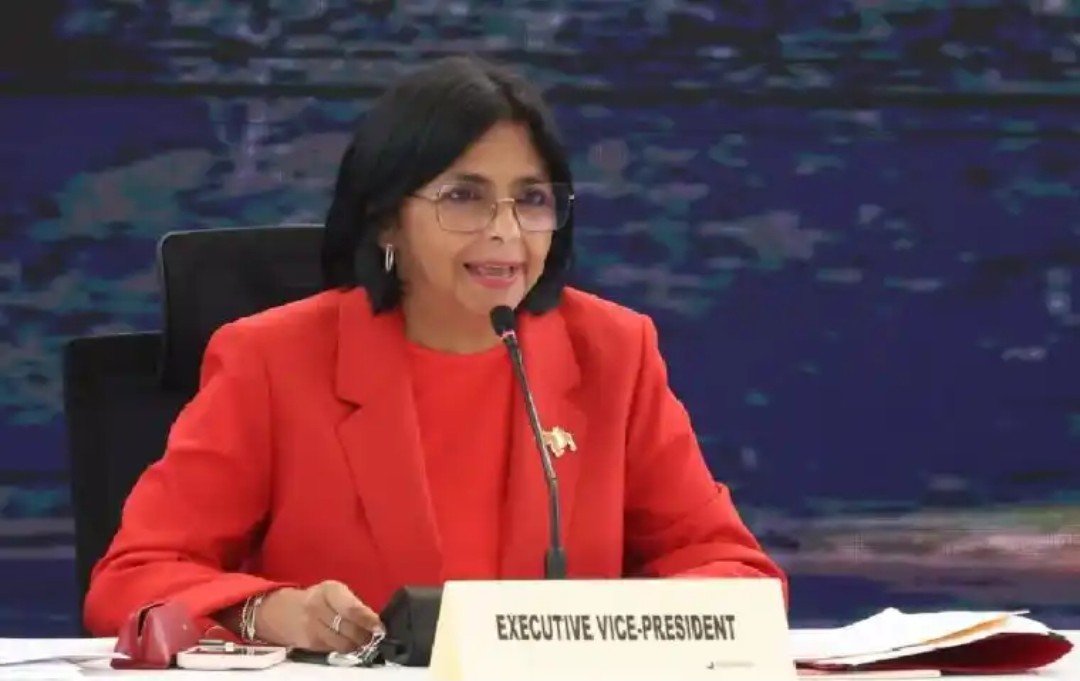
This declaration from Caracas represents a bold response to what Venezuelan officials describe as military and economic pressure led by the Trump administration. Executive Vice President and Minister of Hydrocarbons Delcy Rodríguez endorsed the announcement after a week of rising tensions in the Caribbean Sea.
On Tuesday, the U.S. government took the significant step of labeling the Venezuelan government a foreign terrorist organization. Along with this designation, President Donald Trump ordered a total maritime blockade of all sanctioned oil tankers traveling to or from Venezuela. This action came just days after U.S. forces reportedly seized an oil tanker off the Venezuelan coast, setting the stage for a potential confrontation over international shipping rights.
In an official statement, PDVSA insisted that its fleet would continue to sail freely for navigation and trade. The state oil firm asserted that its tankers have all necessary insurance, technical support and operational guarantees to meet international commitments.
PDVSA characterized the ongoing shipment of crude as a matter of energy sovereignty. The company argued that its operations are protected under the UN Charter and established international maritime law. According to company leadership, crude oil and derivative export operations are proceeding normally and tankers linked to PDVSA continue to sail securely.
The Venezuelan government has described the recent U.S. actions as acts of international piracy. This includes the seizure of the M/T Skipper last week, an operation that has been depicted as a dramatic raid with U.S. personnel rappelling from a helicopter. Caracas has officially protested to the United Nations Security Council, accusing Washington of state piracy regarding the December 10 incident. Venezuelan officials claim that the seizure of the tanker, which was carrying Venezuelan crude, violated international standards.
President Trump characterized the military presence as the largest Armada ever assembled in South America’s history. Referring to the heavy U.S. military presence in the Caribbean, which includes the world’s largest aircraft carrier, Trump warned that Venezuela is completely surrounded. He reiterated Wednesday that U.S. forces would not allow any unauthorized passage.
The U.S. president also accused Venezuela of taking energy rights and oil that he claimed belonged to the United States, seemingly referencing the past nationalization of the Venezuelan oil industry.
While the U.S. has justified its increased military presence in the Caribbean as a mission to combat drug trafficking, the Venezuelan government sees the anti-narcotics operations as a pretext to topple President Nicolas Maduro and seize the nation’s oil resources. In August, the U.S. initiated its largest military deployment in the region since the 1989 invasion of Panama. Although the U.S. claims the mission targets drug smuggling, critics note that Venezuela plays a minor role in the global drug trade.
The human cost of these rising tensions has already become evident. U.S. strikes on alleged drug-smuggling boats in the Caribbean and eastern Pacific have resulted in at least 95 deaths since the operations began.
Despite the military presence and years of sanctions, PDVSA leadership stated that the industry’s operational capacity remains intact. The company credited its workforce for maintaining production levels amid increased military activity. However, the economic stakes are high for a country that holds the world’s largest proven oil reserves but depends almost entirely on petroleum exports to sustain its economy.
Venezuela’s economy has been collapsing for the last decade. The country currently produces about one million barrels of oil per day, a steep drop from more than three million barrels produced daily in the early 2000s. Since 2019, Venezuela has faced a U.S. oil embargo that has forced the government to sell its production on the black market at significantly lower prices, with most exports heading to Asian countries.
The escalation has sparked concern and condemnation from international leaders. The foreign minister of China, which is the main market for Venezuelan oil, defended Caracas in a telephone call with Venezuelan Foreign Minister Yvan Gil. The Chinese representative stated that China opposes unilateral bullying and supports countries in defending their sovereignty and dignity.
Mexican President Claudia Sheinbaum also addressed the situation on Wednesday. She criticized the international response, saying the United Nations was absent. Sheinbaum urged the UN to act and prevent any potential bloodshed from the standoff.
Within the United Nations, Secretary General Antonio Guterres spoke with Maduro to discuss the implications of the blockade for regional peace. Guterres urged both the United States and Venezuela to show restraint and de-escalate tensions to maintain regional stability.
PDVSA described the U.S. accusations of narco-terrorism against the Venezuelan government as unsubstantiated. The company pointed out that international bodies like the United Nations have not supported such claims. Venezuelan officials reiterated their intent to challenge the legality of the blockade in various international forums, arguing that U.S. actions violate global order.
On the ground in Venezuela, the military has expressed support for the Maduro administration. Military leaders stated Wednesday that they are not intimidated by U.S. threats and heavy naval presence.
Oil prices reacted quickly to news of the blockade, rising in early trading in London on Wednesday. This market volatility reflects fears that the confrontation could lead to broader conflict or a permanent disruption of oil supplies from the region.
As the U.S. military continues its operations in the Caribbean, the Venezuelan government remains focused on its message of energy sovereignty. PDVSA emphasized that it maintains all technical support and operational guarantees to fulfill its commitments to global markets.
The situation represents a significant escalation in U.S.-Venezuelan relations. With the U.S. administration vowing to maintain the blockade and Caracas denouncing the moves as international piracy, the risk of potential U.S. intervention raises fears throughout the region.
The Venezuelan government insists that its oil will continue to reach global markets despite the U.S. fleet’s presence. Officials in Caracas have highlighted the support of international allies and the resilience of the PDVSA workforce as proof that the country can withstand current pressures.
The Trump administration seems focused on undermining domestic support for Maduro by targeting the country’s main revenue source. However, the Venezuelan government has leveraged the blockade to rally international support against what it calls unilateral bullying and a violation of its sovereign rights.
As the blockade enters its first full week, the international community remains divided. While the U.S. intensifies its military and economic offensive, countries like China and Mexico have called for respect for national dignity and a diplomatic resolution to the crisis. The United Nations now faces pressure to mediate the dispute as both sides remain firm in their positions.
Venezuela’s formal protest to the UN Security Council illustrates its strategy of using legal means to oppose the blockade. By accusing the U.S. of state piracy, Caracas seeks to frame the conflict not as an issue of internal governance or criminal behavior but as a violation of international laws governing the high seas and global trade.
In the coming days, it will become clearer whether calls for restraint from Guterres and Sheinbaum will lead to de-escalation or if the largest Armada in South American history will result in further maritime seizures and conflict. For now, PDVSA insists it will continue its operations, while the U.S. holds its total blockade on the movement of Venezuelan crude.