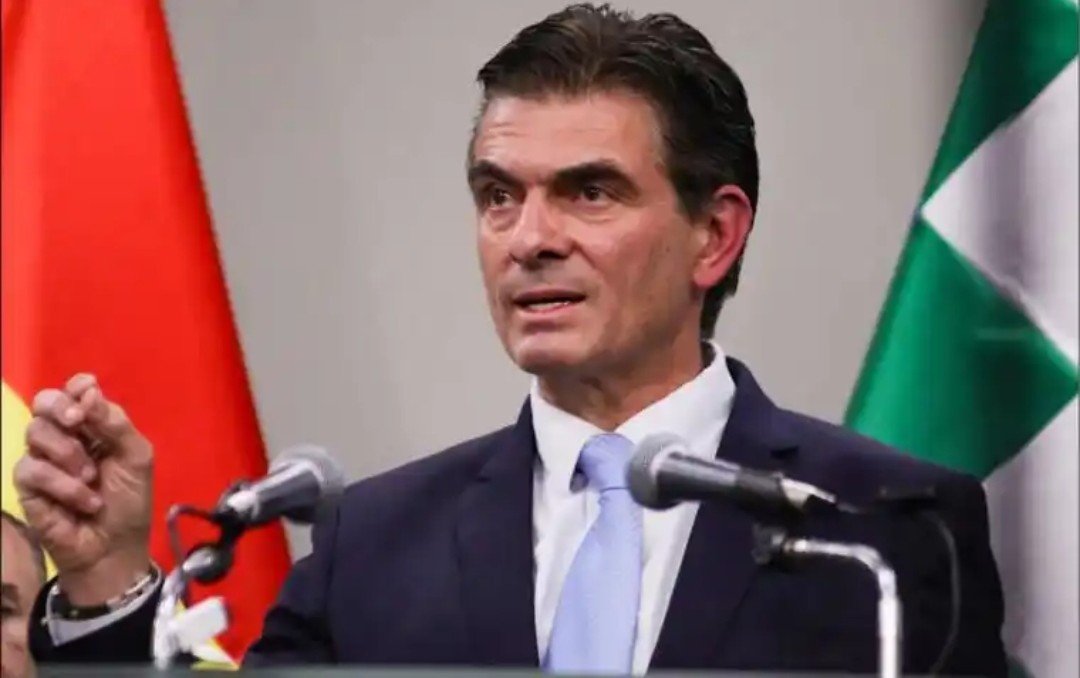
President Rodrigo Paz Pereira has declared a sweeping state of economic and social emergency across Bolivia, marking a fundamental shift in the nation’s fiscal direction. In a move that balances fiscal austerity with progressive labour protections, the administration announced the total elimination of decades-old fuel subsidies alongside a substantial 20 percent increase in the national minimum wage.
In a televised address to the nation, President Paz said the emergency powers were necessary to allow his government to act swiftly and coordinate state resources to stabilize an economy grappling with severe foreign currency shortages, chronic fuel scarcity and rising inflation. He directly attributed the nation’s financial challenges to the fiscal management of previous administrations, though he did not name his immediate predecessor.
“We face profound structural problems,” President Paz stated. “The decree we present today is a necessary tool to address these issues with the urgency they demand.”
The most immediately impactful measure is the end of a nearly two-decade-old policy that maintained a fixed domestic price for fuel at approximately $0.53 USD per liter. The government estimates the subsidy program cost the treasury more than $2 billion annually, a drain it argues is unsustainable as the country’s foreign currency reserves dwindle. New prices are now set at $1 per liter for Special Gasoline, $1.58 for Premium Gasoline, and $1.40 for Diesel. The price of liquefied petroleum gas (LPG), used for cooking, will remain unchanged in an effort to protect the most vulnerable households from direct energy poverty.
Concurrently, the government announced a 20% increase in the national monthly minimum wage, raising it from $395 to $474, effective January 2, 2026 to mitigate the inflationary pressure of these price hikes on citizens. Officials also pledged to bolster existing social safety net programs, though specific details and funding mechanisms were not immediately provided.
President Paz, who took office in November 2025, has claimed his administration is inheriting an economy characterized by chronic shortages of both fuel and hard currency, framing the subsidy as fiscally irresponsible and regressive and argued it “disproportionately benefited wealthier citizens” and fueled a lucrative contraband trade with neighboring countries where fuel prices are significantly higher.
Throughout the last decade, the previous administrations relied heavily on the depletion of Central Bank reserves to maintain the fixed exchange rate and the fuel subsidies. This strategy, while providing temporary stability, eventually led to a “dollar drought” that has left importers unable to pay for essential goods.
In the address, Paz Pereira argued that the country could no longer ignore the structural imbalances created by the management of previous governments. He described the decree as a painful but vital intervention to prevent a total collapse of the social fabric. The president emphasized that the billions of dollars previously diverted to fuel importers would be partially redirected toward “enhanced social safety net programs” designed to support the informal labor sector, which makes up a significant portion of the Bolivian workforce. The administration has also suggested that a portion of the savings from the fuel subsidy removal will be used to fund school breakfast programs and healthcare clinics in rural Indigenous communities, areas that have historically been marginalized during periods of economic transition.
In a related measure, the government has removed diesel from the list of controlled substances. This technical change is designed to facilitate private imports for the agro-industrial and transport sectors. Previously, the state held a monopoly on the importation and distribution of fuels, which often led to bottlenecks when the government lacked the foreign currency to pay international suppliers.
By allowing private companies to import their own fuel, the government hopes to alleviate the chronic queues at service stations that have plagued the country for months. However, the move has been met with mixed reactions. Leaders of Bolivia’s labour unions, traditionally a bastion of support for the previous socialist government have condemned the move as a return to neoliberal shock therapy and expressed concern that privatizing the import process could lead to even higher costs for small scale farmers who do not have the capital to import fuel independently.
The government countered these concerns by stating that the state oil company, YPFB, will continue to provide fuel at the regulated price, while the private import option will serve as a “relief valve” for large scale industrial operations. This dual system is intended to ensure that the needs of the agro-export industry are met without draining the state’s remaining dollar reserves.
Economic analysts note the government is walking a tightrope. “The subsidies were fiscally unsustainable and created major market distortions,” said La Paz-based economist Gloria Fernandez. “However, the execution is extremely high-risk. The success of this policy hinges entirely on the government’s ability to control the subsequent inflationary spiral and deliver on its promise of strengthened social compensation. If those supports are delayed or insufficient, social unrest is inevitable.”
The IMF and the World Bank have long urged Bolivia to reduce its substantial fiscal deficits. The International Monetary Fund, in a report last year, highlighted the fuel subsidy as a significant contributor to the country’s financial imbalances.
As the measures take effect, the focus will remain on the inflation index and the stability of the Bolivian boliviano. If the government can successfully bridge the gap between the end of the subsidies and the implementation of the new social protections, it may be able to stabilize an economy that has been on the brink of exhaustion for years. If the measures fail to protect the purchasing power of the average citizen, the state of emergency may become a more literal description of the country’s social climate. The coming weeks will test the administration’s ability to manage the economic fallout and the political temperature in a nation familiar with contesting economic policy in the streets. The Paz administration is betting that a higher minimum wage and promised social programs will provide a sufficient cushion, a calculation that will soon face its first real-world test.