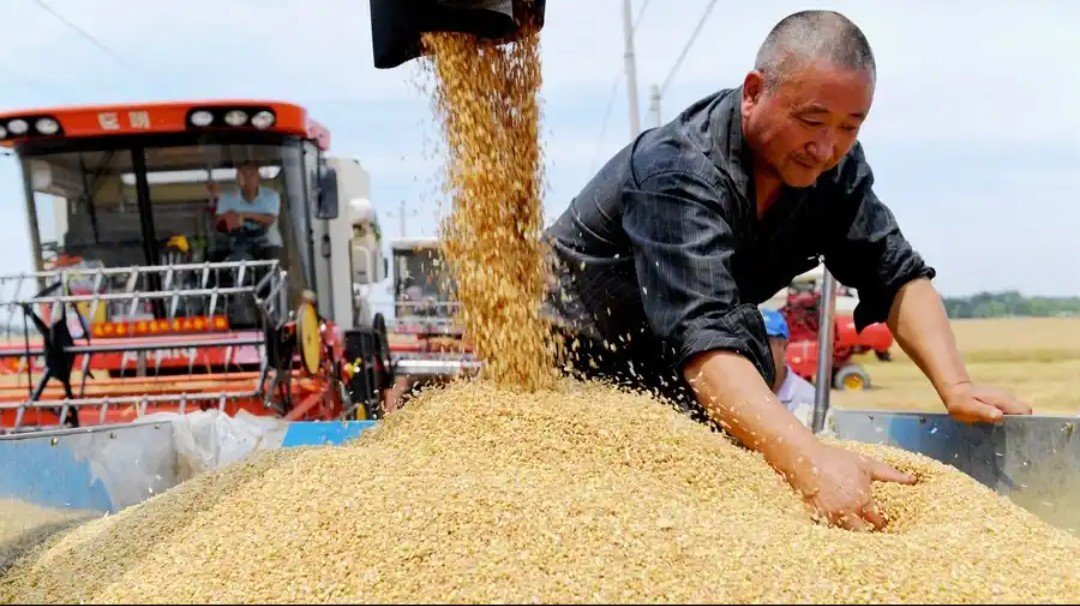
China’s agricultural sector reached a major milestone on Friday as the National Bureau of Statistics announced that annual grain production hit a record high of 714.88 million metric tons in 2025. This achievement, a 1.2 percent increase from the previous year, comes as the central government enhances its efforts to ensure food sovereignty and stabilize domestic markets amid changing global economic conditions.
The data from the National Bureau of Statistics (NBS) indicates that the country has successfully navigated a challenging year of climate issues and international trade instability. The sustained output growth results from a multi-year strategy focused on increasing cultivated land and improving the efficiency of state-supported agricultural infrastructure. According to the report, the national grain planting area expanded for the sixth consecutive year, now exceeding 119 million hectares. A key factor in this growth is a 1.1 percent increase in yield per unit area. This productivity boost reflects a shift toward developing high-standard farmland and integrating modern technology into traditional farming practices.
Wei Fenghua, an official with the NBS, attributed the steady expansion of farmland to national policies aimed at promoting social stability through food security. Wei noted that the government has enforced strict measures to protect arable land, concentrating on both quantity and quality. One main factor in this expansion has been the recovery of abandoned agricultural fields. In many rural areas, local collectives and state agencies have worked together to reclaim land that was previously underused or left uncultivated. This initiative ties into a larger effort to ensure that the nation’s “red line” for arable land, the minimum amount necessary for self-sufficiency, remains intact.
Additionally, the government has optimized crop planting structures to better meet the nutritional needs of the population and the environmental capacities of different regions. By directing resources toward high-yield and drought-resistant varieties, the state aims to protect the domestic food supply from unpredictable fluctuations in the global commodity market.
Officials do not frame the record harvest merely as a statistical success; they see it as a cornerstone of the country’s rural revitalization strategy. This policy seeks to narrow the wealth gap between cities and the countryside by investing heavily in rural infrastructure, education and healthcare.
Wei stated that the significant harvest lays a strong foundation for speeding up agricultural modernization. In the context of the government’s common prosperity goals, this modernization aims to ensure that smallholder farmers share in the benefits of technological progress, rather than these benefits going exclusively to large agribusinesses.
By stabilizing grain prices through a robust domestic supply, the state creates a safety net for low-income households. In many developing economies, rising food prices act as a regressive tax that heavily impacts vulnerable populations. China’s capacity to maintain a steady and increasing supply of staples like rice, wheat and corn provides a buffer against the inflationary pressures seen in privatized global food systems.
The 1.1 percent increase in yield per unit area highlights the state’s commitment to agricultural science. Over the past several years, the government has invested significantly in research focused on seed sovereignty to lessen reliance on international companies for essential crop genetics.
In provinces like Heilongjiang and Henan, which serve as the nation’s breadbasket, the use of digital monitoring systems and automated irrigation has enabled more precise resource management. These advancements have assisted farmers in minimizing the impact of pests and erratic weather. Unlike market-driven models that prioritize short-term gains, the state-led approach in these regions emphasizes long-term soil health and sustainable water use.
The shift to high-standard farmland includes leveling land, improving irrigation and drainage systems, and building field roads. These upgrades have enabled smaller farming collectives to use machinery that was previously only available to large-scale operations, boosting the productivity of rural communities.
The NBS report emphasizes that this agricultural success boosts the momentum of the broader economic recovery. As the global economy continues to face challenges like high interest rates and supply chain disruptions, China’s agricultural stability offers a reliable anchor for its domestic economy.
The government insists that high-quality development cannot happen without a secure agricultural base. By ensuring that the population’s basic needs are met through internal production, the state can manage other sectors of the economy more effectively without worrying about food shortages or sudden price spikes.
Beyond its borders, the record harvest has ramifications for international relations and global equity. Wei pointed out that China’s production levels have positively contributed to stabilizing the international grain market and reinforcing global food security.
For years, the global food market has experienced extreme volatility, often driven by speculative trading in international commodity hubs. When a major consumer and producer like China maintains high levels of self-sufficiency, it lessens overall demand pressure on global reserves, helping to keep prices affordable for lower-income nations that depend heavily on grain imports.
The 2025 record was achieved despite significant environmental challenges. Several regions faced a mix of heatwaves and localized flooding during peak growing seasons. The state’s response involved quickly mobilizing resources, such as emergency drainage equipment and distributing fast-growing replacement seeds to affected farmers.
Proponents of the centralized planning model often cite this resilience as an advantage in dealing with climate change. By coordinating a national response, the government can redirect surpluses and provide financial assistance to prevent individual farmers from facing bankruptcy due to a bad season.
The NBS data also indicates an increase in the production of soybeans and oilseeds, crops that the government has specifically targeted for expansion. Boosting domestic output of these crops aims to reduce reliance on imports from the Americas, further protecting the food chain from geopolitical issues and the environmental costs of long-distance shipping.
Looking ahead, the National Bureau of Statistics stresses that agricultural modernization is an ongoing effort. The record of 714.88 million metric tons serves as a baseline for future growth rather than an endpoint.
The government plans to continue focusing on the “two-wheel drive” of policy and technology. This means refining the subsidies given to grain growers to make farming a viable and appealing career for the next generation of rural workers. At the same time, the state intends to increase investment in “green” agricultural practices, such as reducing the use of chemical fertilizers and pesticides in favor of organic options and biological pest control.
The official narrative emphasizes that food security is a basic human right and essential for national sovereignty. By treating grain production as a public good rather than just a commodity, the state aims to show a development model that prioritizes collective stability and the well-being of farmers.
As the global community faces the pressures of a growing population and a changing climate, China’s 2025 harvest data will likely be examined as an example of how state intervention and long-term planning can yield consistent results in an uncertain world.
The report concluded that the record harvest not only secures the “rice bowls” of the Chinese people but also signifies a vital contribution to the shared goal of eliminating hunger worldwide. For millions of farmers across the country’s diverse landscape, the 1.2 percent production increase means more than just a number; it reflects a coordinated national effort to create a more resilient and fair agricultural future.