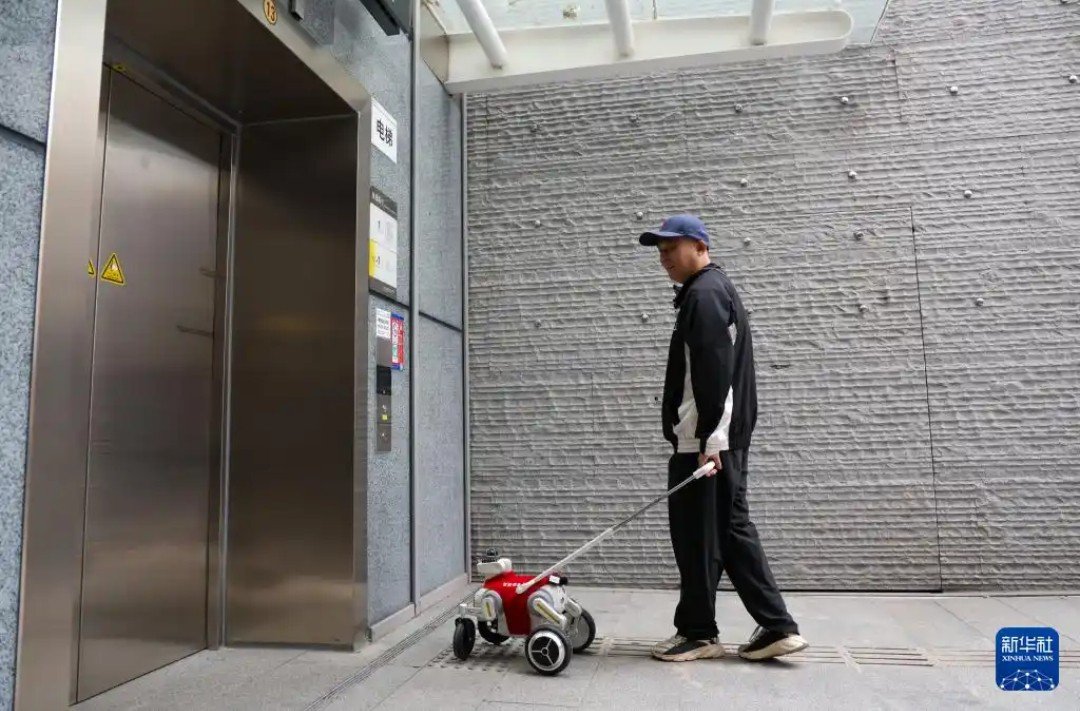
In a global first for rail transit, Shenzhen Metro has begun testing a robotic guide dog to assist visually impaired commuters. The pilot program started Saturday at the Huangmugang transportation hub. This marks the first use of autonomous quadruped technology in the global rail transit sector.
This initiative shows a move toward using advanced artificial intelligence in government-funded public projects. By focusing on social equity through tech investments, the city aims to break down traditional barriers to mobility. The robot, called Xiaosuan, or “Little Garlic,” is part of a larger city plan to modernize urban transit with universal design and inclusive innovation.
Xiaosuan is an impressive blend of hardware and software engineering. Unlike standard assistive devices, this robotic guide dog uses a multi-modal 3D-voxel neural network sensing system. This technology helps it create a real-time, high-definition digital representation of its surroundings, which allows it to navigate the busy, complex environments typical of a major transit hub.
Its operational abilities are backed by large visual language models. These models enable the robot to process visual information and verbal commands at the same time, allowing for smooth voice interactions with passengers. The system allows for independent route planning and accurate navigation, crucial for dealing with the multi-level layout of the Huangmugang hub.
Using this technology in public infrastructure demonstrates a commitment to spending public funds for the common good. By automating navigation for the visually impaired, the transit authority prioritizes accessibility as a key goal of its technology strategy. The robot has advanced obstacle avoidance sensors to help it maneuver around commuters and stationary objects with great precision, keeping a safe pace for its human companion.
The pilot program currently operates in the accessible elevator area near exits 13 and 14 of the Huangmugang hub. Liu Xuelian, an employee with Shenzhen Metro, noted that the unit has passed thorough safety tests and inspections to meet the strict standards of a public rail environment.
During the initial 30-day trial, the city has set up a backup safety measure. Staff members will accompany each user of the robotic guide dog to monitor their interactions and collect data for future improvements. This human-supervised phase aims to manage the shift to autonomous assistance responsibly.
One key benefit of the robotic system is its consistency. Users involved in early tests mentioned that the electronic guide dog stays completely focused on navigation, unlike biological service animals, which can be distracted in crowded places. A passenger named Mo noted that the device maintains a level of steady focus that boosts the user’s confidence while moving through the station.
Introducing the robotic guide dog is part of a thorough update of Shenzhen’s barrier-free services. The city’s transit operator confirmed that all 485 stations in the metropolitan network now have full barrier-free access. This includes tactile paving, elevators, and improved signage for various accessibility needs.
This project is also crucial for the city’s preparations for the 12th National Games for Persons with Disabilities. The event has pushed public investment in assistive technologies. By using the National Games as a deadline for infrastructure upgrades, the municipal government ensures the benefits of these technologies will continue for the public long after the events end.
The focus on public infrastructure investment for social equity is clear in the "return to dock" feature of the Xiaosuan unit. After guiding a passenger to their destination, such as a specific platform or exit, the robot automatically goes back to its charging station. This keeps the service available for the next commuter without requiring help from station staff, creating a sustainable cycle of public service.
The idea behind the Xiaosuan project aligns with universal design principles, which state that environments should be easily accessible for everyone, regardless of their physical abilities. By investing in AI-driven solutions, Shenzhen Metro meets the specific needs of the blind and low-vision community while also improving the city’s overall tech profile.
Using 3D-voxel neural networks allows the robot to perceive the world in three dimensions. This capability is crucial for handling elevation changes, stairs and escalators in modern rail stations. Such environmental awareness ensures that the robot provides a service that substitutes for the sight of a sighted companion. A passenger remarked during the trial that the device serves effectively as eyes for those who cannot see.
Moreover, bringing these robots into the public space democratizes advanced technology. While high-end AI often stays within private companies or luxury uses, the Shenzhen model makes this innovation available to the public, specifically addressing a demographic that has often been overlooked by rapid technological changes.
If the trial at the Huangmugang hub succeeds, the transit authority is open to expanding the service to other major hubs across the city. Such expansion would be a significant step towards a fully automated and inclusive transit network.
The success of the robotic guide dog pilot could provide a model for other global cities looking to update their aging infrastructure. The focus on multi-modal sensing and extensive AI models suggests that the future of public transit will depend on systems effectively interacting with their users. By prioritizing the needs of the most vulnerable passengers first, Shenzhen sets a high standard for how cities can use technology to build social unity and mobility.
This program also highlights the importance of public sector leadership in innovation. While private companies keep developing robotic solutions, the use of these tools in public rail systems guarantees that the benefits reach everyone. The goal is not just to showcase tech capabilities, but to create a city where every citizen, regardless of visual ability, can navigate the urban landscape independently and with dignity.
As the 30-day trial goes on, the data collected will help fine-tune the robot’s interaction protocols and navigation algorithms. This continuous improvement process, enabled by the city’s strong tech ecosystem, ensures that the final version of the service will be both dependable and responsive to the community’s needs. Through this combination of public funding and cutting-edge AI, the city is redefining the role of modern transit stations as hubs of movement and social progress.